


Specializing in CNC machining plastic, metal parts including 6061 T6, and aerospace components.
Hongsinn-675
Crafting Excellence: Precision CNC Machining for Plastic, 6061 T6 Metal Parts, and Aerospace Components. Elevate Your Projects with Unmatched Expertise and Quality. Your Partner in Innovation and Performance!
Delivery
FOB
minimum order
1 piece
Supply Ability
5000piece / Week
Country of Origin
Shenzhen
Stock Time
7~15Day
Quantity:
US $0.59 - US $10.68 / piece
Specializing in CNC machining plastic, metal parts including 6061 T6, and aerospace components.
At Shenzhen Hongsinn Precision Co., Ltd. we specialize in high-precision CNC machining plastic and metal parts, expert 6061-T6 CNC machining, and certified CNC machining aerospace parts manufacturing. Our state-of-the-art facility combines advanced multi-material capabilities with aerospace compliance to serve defense, aviation, and space industries.
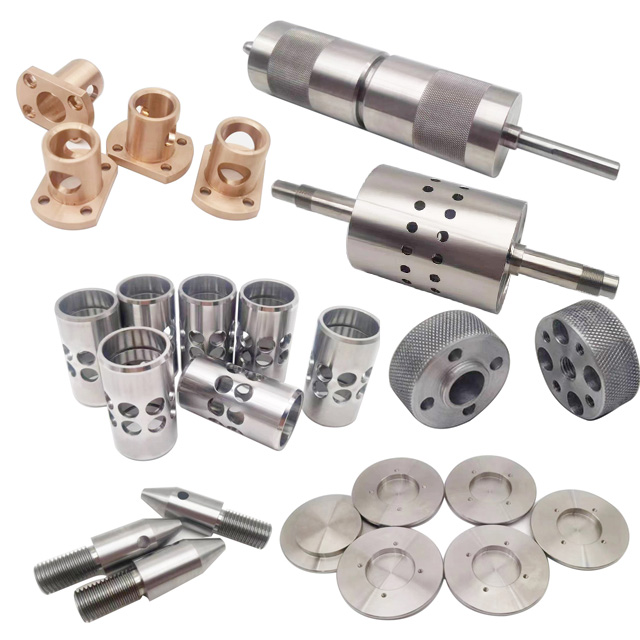
Choosing the right manufacturing method for a new product is often easier said than done. CNC machining and plastic injection molding are both common and cost-effective methods of producing parts. While the two methods are similar in these ways, they are completely different manufacturing methods. CNC machining is a subtractive manufacturing process that uses metal cutting tools to remove material from a workpiece to create the final part shape. Plastic injection molding forces liquid plastic to conform to the shape of a mold to create a finished part. There are three main differences between the two terms.
Definition of CNC machining and comparison with plastic injection molding
CNC machining is a subtractive manufacturing process that uses machines such as milling machines, lathes, drill presses, and saws to create high-precision parts. Computer-aided design (CAD) data is developed during the product design phase. This CAD data is then used as the basis for programming and optimizing machine tool sequences and paths. The material is then processed using milling tools such as end mills and drills to create the part. Auxiliary machinery, including honing machines, gear hobbing machines, or grinding machines, may also be required to complete the part to customer specifications.
Although hand-machined parts have existed since 1300 BC, CNC machining was not developed until the mid-1940s. The first control mechanism that was eventually used on CNC machines was used to punch code tapes as a form of communication. In 1949, the first experimental three-axis milling machine was created to create helicopter blades and harder casings for various aircraft. In the 1970s, CAD and CAM software began to be integrated into CNC systems. Currently, CNC machining is one of the most widely used manufacturing methods in the world. It is used to manufacture products in a variety of industries such as automobiles.
Processing | CNC Turning, CNC Milling, Laser Cutting, Bending, Spinning, Wire Cutting, Stamping, Electric Discharge Machining (EDM), Injection Molding | |||
Materials | Aluminum: 2000 series, 6000 series, 7075, 5052, etc. | |||
Stainless steel: SUS303, SUS304, SS316, SS316L, 17-4PH, etc. | ||||
Steel: 1214L/1215/1045/4140/SCM440/40CrMo, etc. | ||||
Brass: 260, C360, H59, H60, H62, H63, H65, H68, H70, Bronze, Copper | ||||
Titanium: Grade F1-F5 | ||||
Plastic: Acetal/POM/PA/Nylon/PC/PMMA/PVC/PU/Acrylic/ABS/PTFE/PEEK etc. | ||||
Surface Treatment | Anodized, Bead Blasted, Silk Screen, PVD Plating, Zinc/Nickel/Chrome/Titanium Plating, Brushing, Painting, Powder Coated, Passivation, Electrophoresis, Electro Polishing, Knurl, Laser/Etch/Engrave etc. | |||
Tolerance | ±0.002 ~ ±0.005mm | |||
Surface Roughness | Min Ra 0.1~3.2 | |||
1.Direct OEM/0DM manufacturer, advanced produce technical,the highest tolerance we can reach to ±0.005mm;
2.Complete produce equipment and test equipment. Independent Engineer team, to check drawings, provide quotation, write machining process, guide production.
3.Independent PMC department, to make production plan and manage delivery time.
4.Quick proofing, short delivery time, usually is 3-15 days
4.Quick proofing, short delivery time, usually is 3-15 days
5 .The company has gathered a rich group of technologicallyadvanced modern talents, which has laid a stable foundationfor the long-term development of the company.
6.Complex and difficult surface and functional structureof the hand plate model, We can all mold quickly.xxx
What are the Advantages of CNC Machining Compared to Plastic Injection Molding?
Here are some of the advantages of CNC machining over injection molding:
1. It is easy to obtain a beautiful surface finish and tight tolerances with CNC machining, since small diameter tools can be used and each process parameter can be optimized.
2. Since both plastic and metal materials can be cut, a variety of materials can be shaped using CNC machining.
3. It is easy to modify part designs, since the program containing the CNC machine instructions and fixtures can be quickly changed to match successive design iterations.
4. CNC machining has a faster mold delivery time than injection molding
What are the Disadvantages of CNC Machining Compared to Plastic Injection Molding?
Listed below are the disadvantages of CNC machining vs. injection molding:
1. High volume production and per-part prices are more expensive for CNC machined products due to the longer per-part cycle time required to manufacture the parts.
2. Labor intensive because the workpiece, finished parts, tools, and tool holders must be attached to or removed from the machine as the job requires.


























Recommend Products
 Providing precision engineering machining services including CNC turning and milling services, CNC lathe components. cnc turning service
 Precision CNC parts for motorcycles and automotive machinery.
 CNC Machining Services in China for High Precision Parts
 Specializing in precision CNC machining for plastic components and tool steel.