


Precision CNC turning and milling shop specializing in Swiss turning.
Hongsinn-338
Elevate Your Manufacturing Precision! Explore our premier precision CNC turning and milling shop, specializing in Swiss turning. Experience excellence in every detail with our advanced solutions.
Delivery
FOB
minimum order
1 piece
Supply Ability
5000piece / Week
Country of Origin
Shenzhen
Stock Time
7~15Day
Quantity:
US $0.50 - US $10.89 / piece
Precision CNC turning and milling shop specializing in Swiss turning.
Precision CNC turning shops, CNC turning & milling, and CNC Swiss turning are essential components of modern manufacturing, offering advanced capabilities for producing high-quality, customized components. These processes are critical for industries that demand precision, efficiency, and reliability. This article explores these topics, their benefits, applications, and how they contribute to efficient and reliable manufacturing.
Our Services | CNC Turning, CNC Milling, Laser Cutting, Bending, Spinning, Wire Cutting, Stamping, Electric Discharge Machining (EDM), Injection Molding. |
Materials Available | Aluminum: 2000 series, 6000 series, 7075, 5052, etc. |
Stainless Steel: SUS303, SUS304, SS316, SS316L, 17-4PH, etc. | |
Steel: 1214L/1215/1045/4140/SCM440/40CrMo, etc. | |
Brass: 260, C360, H59, H60, H62, H63, H65, H68, H70, Bronze, Copper. | |
Titanium: Grade F1-F5. | |
Plastic: Acetal/POM/PA/Nylon/PC/PMMA/PVC/PU/Acrylic/ABS/PTFE/PEEK etc. | |
Surface Treatment | Anodized, Bead Blasted, Silk Screen, PVD Plating, Zinc/Nickel/Chrome/Titanium Plating, Brushing, Painting, Powder Coated, Passivation, Electrophoresis, Electro Polishing, Knurl, Laser/Etch/Engrave etc. |
Tolerance | ±0.002 ~ ±0.005mm |
Surface Roughness | Min Ra 0.1~3.2 |
What are the differences in processing aluminum alloys and magnesium alloys?
In China, the widespread use of metals showcases the characteristics and application areas of different metals. So, what are the key differences between aluminum alloys and magnesium alloys?
1. What is an aluminum alloy?
Aluminum alloys have low density and high strength, with strength approaching or exceeding that of high-quality steel. They possess good plasticity and can be processed into various profiles. Simultaneously, aluminum alloys exhibit excellent electrical and thermal conductivity, as well as corrosion resistance, making them widely used in industry, second only to steel in terms of application scope. Aluminum alloys are the most commonly used non-ferrous metal structural materials in industry, widely applied in aviation, aerospace, automotive, machinery manufacturing, shipbuilding, and chemical industries.
2. What is a magnesium alloy?
Magnesium alloys are alloys composed of magnesium and other elements, possessing the following characteristics: low density (approximately 1.8 g/cm³), high strength, high elastic modulus, and good heat dissipation. Magnesium alloys have superior shock absorption performance, with an impact load capacity greater than aluminum alloys, and also exhibit good resistance to organic matter and alkali corrosion. Magnesium alloys are mainly used in industries such as aviation, aerospace, transportation, chemical industry, and rocket.
What are the differences in processing aluminum alloy and magnesium alloy?
Different tensile strengths: For the same volume, a magnesium alloy frame has lower tensile strength than an aluminum alloy frame. To achieve the same strength, a magnesium alloy frame requires increased material thickness and tube diameter. Therefore, magnesium alloy does not have a weight advantage over aluminum alloy.
Different fatigue strengths: For the same volume, a magnesium alloy frame has poorer durability and lower fatigue strength than an aluminum alloy frame. As the number of cycles increases, the number of stress applications also increases, resulting in a frame lifespan typically not exceeding 2-3 years, with a significant decrease in strength. This is a major drawback of magnesium alloy, which is why professional cyclists rarely choose magnesium alloy frames. If they do choose to use a magnesium alloy frame in racing, they usually carefully calculate the mileage and replace it promptly after a period of use.
Different Oxidizing Properties
According to the periodic table, magnesium alloys are more prone to oxidation and corrosion than aluminum alloys. This makes magnesium alloys less durable in certain environments, requiring additional protective measures.
Different Manufacturing Costs
As reactive metals, magnesium alloys have higher requirements for manufacturing equipment and production environments, resulting in significantly higher manufacturing costs than aluminum alloys. Furthermore, the cost-effectiveness of producing magnesium alloy bicycle frames is far lower than that of aluminum alloy frames.
As reactive metals, magnesium alloys have higher requirements for manufacturing equipment and production environments, resulting in significantly higher manufacturing costs than aluminum alloys. Furthermore, the cost-effectiveness of producing magnesium alloy bicycle frames is far lower than that of aluminum alloy frames.
Different Specific Densities
Under the same volume conditions, magnesium alloys have a lower specific density than aluminum alloys, giving them an advantage in applications requiring lightweight construction.
Under the same volume conditions, magnesium alloys have a lower specific density than aluminum alloys, giving them an advantage in applications requiring lightweight construction.


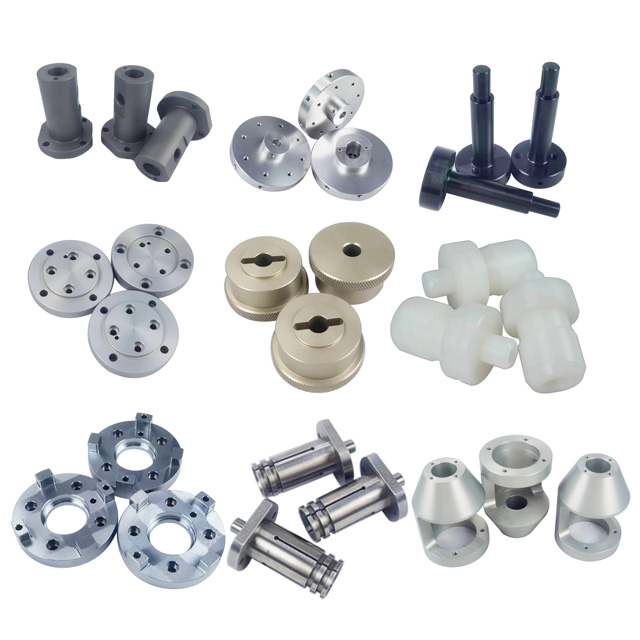
Specification:
| Material | Steel |
| Application | Accessories |
| Color | Black |
| Package | Carton Box |
| Surface treatment | Black Oxide |
| Drawing format | 2D/(PDF/CAD),3D(IGES/STEP) |
| Certificates | ISO9001:2015/ISO13485:2016 |
| Lead time | 1-2 weeks |
FAQ:
Q1:What's kinds of information you need for quotation?
Hongsinn: You can provide 2D/3D drawing or send your sample to our factory, then we can make according to your sample.
Q2: Can we sign NDA?
Hongsinn: Sure. We never divulge customers' information to anyone else.
Q3: Do you provide sample?
Hongsinn: Yes, we can provide you sample before mass order.
Q4: How can you ensure the quality?
Hongsinn: We have profesional QC department to guarantee the quality.
Recommend Products
 Providing precision engineering machining services including CNC turning and milling services, CNC lathe components. cnc turning service
 Precision CNC parts for motorcycles and automotive machinery.
 CNC Machining Services in China for High Precision Parts
 Specializing in precision CNC machining for plastic components and tool steel.