Multi-axis electro-machining for close tolerance precision.
Multi-axis electro-machining for close tolerance precision.
Modern manufacturing requires increasingly complex components with extremely tight tolerances. Close tolerance machining, combined with advanced EDM processes and multi-axis machining capabilities, enables manufacturers to meet these stringent requirements in the aerospace, medical and automotive industries.
Features | CNC Turning Parts | |
Maximum Part Size | 236"x 118"x 24" (6,000 x 3,000 x 610 mm) | 62"Length x 32"Diameter (1,575 mm Length x 813 mm Diameter) |
Minimum Feature Size | 0.020″ (0.50 mm) | 0.020″ (0.50 mm) |
Estimated Delivery Time | 3-7 working days | 3-7 working days |
Standard Tolerance | ISO 2768 MK | ISO 2768 MK |
Precision Tolerance | ±0.0002"(±0.005mm) | ±0.0002"(±0.005mm) |
Threads and Threaded Hole | Standard threads and holes available, also customizable. | Standard threads and holes available, also customizable. |
Edge Conditions | Deburring by default. | Deburring by default. |
Surface Smooth | Ra 0.4 - 1.6μm | Ra 0.4 - 1.6μm |
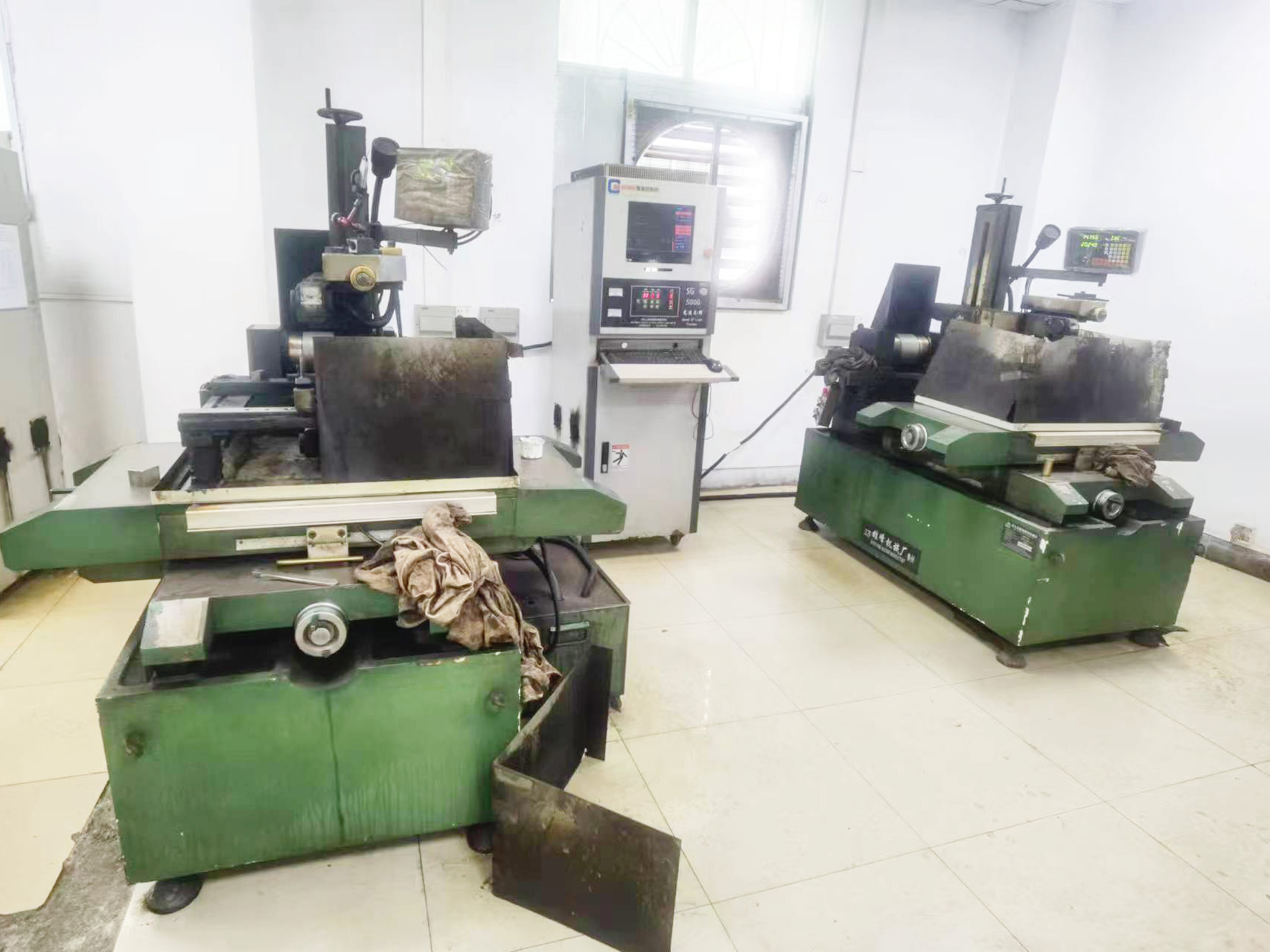
During EDM, the tool electrode and the workpiece are connected to the two poles of the pulse power supply respectively and immersed in the working fluid, or the working fluid is filled into the discharge gap. The tool electrode is fed to the workpiece through the gap automatic control system. When the gap between the two electrodes reaches a certain distance, the pulse voltage applied to the two electrodes breaks down the working fluid and generates spark discharge. A large amount of heat energy is instantly concentrated in the fine channel of discharge, the temperature can reach more than 10,000 degrees Celsius, and the pressure also changes sharply, so that the local trace amount of metal material on the working surface is immediately melted and vaporized, and explosively splashed into the working fluid, quickly condensed, and formed solid metal particles, which are carried away by the working fluid. At this time, a tiny pit mark is left on the surface of the workpiece, the discharge is briefly paused, and the working fluid between the two electrodes returns to an insulating state.