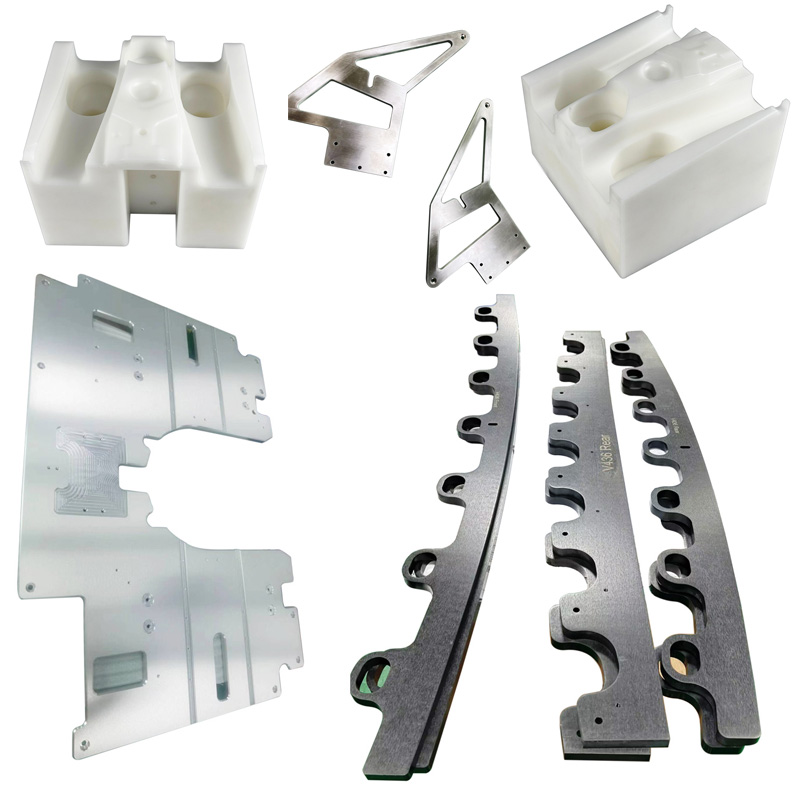
Efficient Automotive Plastic Machined Parts Services
Hongsinn-931
Efficient automotive plastic machined parts services with fast production, custom solutions, and consistent quality.
Delivery
FOB
minimum order
1 piece
Supply Ability
5000piece / Week
Country of Origin
Shenzhen
Stock Time
7~15Day
Quantity:
US $0.59 - US $10.68 / piece
Efficient automotive plastic machined parts services with fast production, custom solutions, and consistent quality.
|
Advantages of Engineering Plastics in High-Performance Applications
Replacing metal parts with engineering plastics can significantly improve fuel efficiency because metals are much heavier than plastics. Furthermore, through optimized design, engineering plastic parts can achieve strength and durability comparable to metals, but at a lower cost. Plastic materials also possess excellent chemical resistance and high-temperature resistance, and their lightweight nature makes them particularly suitable for fuel systems, fluid handling systems, and the high-temperature environments of engine compartments.
With advancements in materials science and processing technology, high-performance plastics such as polyetheretherketone (PEEK) have been widely used in body components and critical working parts. Typical applications include piston rings in automatic transmissions and wear plates in gear systems.
In addition, some engineering plastics possess superior damping properties and can achieve thermal or electrical conductivity through special formulations. This makes them excellent in areas such as electromagnetic interference (EMI) and radio frequency interference (RFI) shielding, as well as certain types of radiators, providing reliable solutions for modern high-performance equipment.
The Shift from Metal to Plastic: A Significant Advantage for the Automotive Industry
In automotive manufacturing, through proper design, plastic parts can achieve performance levels comparable to metal parts. For example, plastic parts can maintain high precision tolerances while reducing secondary processing steps and improving production efficiency. By adding reinforcing materials such as glass fiber and carbon fiber, the tensile strength of plastic parts in key components like brackets and outer panels can rival that of metal.
Plastics outperform metals in several ways:
High production repeatability, ensuring consistency across batches of parts
Less waste, reducing production costs
Extended mold life, up to six times that of metal molds
Easier to comply with regulations, especially environmental and safety standards
High design flexibility, enabling complex geometries and lightweight structures
This shift from metal to plastic not only improves vehicle performance and fuel efficiency but also optimizes manufacturing processes and cost-effectiveness, becoming a significant trend in modern automotive design.