Discover a high-precision machining company specializing in five-axis and electric discharge machining.
Discover a high-precision machining company specializing in five-axis and electric discharge machining.
In today's advanced manufacturing landscape, high-precision machining has become essential for industries demanding micron-level accuracy. Two technologies leading this revolution are five-axis machining and services provided by specialized electric discharge machining (EDM) companies.
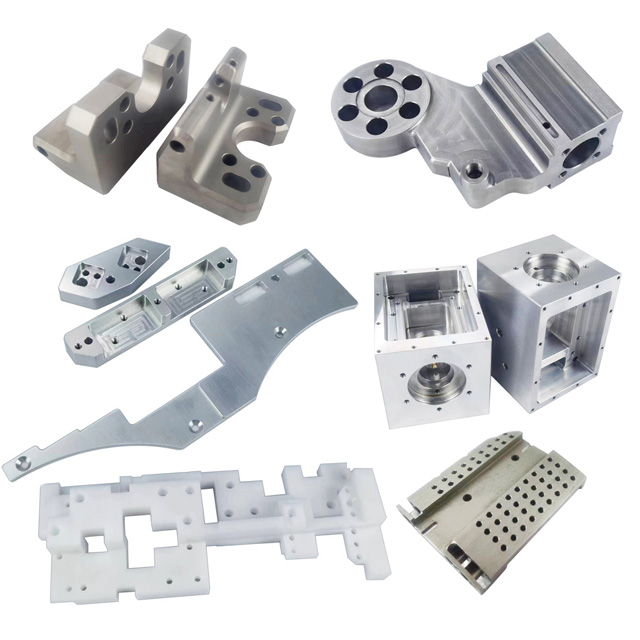
What is five-axis machining?
Five-axis machining is a CNC (computer numerical control) machining technique that utilizes high-speed, precision machinery to remove material. This technique uses a variety of cutting tools to achieve the final design. There are three main types of CNC machine tools: vertical milling machines, horizontal milling machines, and lathes. To efficiently manufacture parts on a CNC machine, a program controls the tool's movement path. Programming instructions for CNC machines are encoded using CAM (Computer Aided Manufacturing) software along with the CAD (Computer Aided Design) files uploaded to the Hongsinn quote page.
Five-axis machines are particularly well-suited for parts requiring complex motion or those that benefit from minimal setup for GD&T datums and features. Since most CNC parts require five-sided machining, this process is becoming increasingly common and valuable in shops both domestically and internationally.
Processing | CNC Turning, CNC Milling, Laser Cutting, Bending, Spinning, Wire Cutting, Stamping, Electric Discharge Machining (EDM), Injection Molding | |||
Materials | Aluminum: 2000 series, 6000 series, 7075, 5052, etc. | |||
Stainless steel: SUS303, SUS304, SS316, SS316L, 17-4PH, etc. | ||||
Steel: 1214L/1215/1045/4140/SCM440/40CrMo, etc. | ||||
Brass: 260, C360, H59, H60, H62, H63, H65, H68, H70, Bronze, Copper | ||||
Titanium: Grade F1-F5 | ||||
Plastic: Acetal/POM/PA/Nylon/PC/PMMA/PVC/PU/Acrylic/ABS/PTFE/PEEK etc. | ||||
Surface Treatment | Anodized, Bead Blasted, Silk Screen, PVD Plating, Zinc/Nickel/Chrome/Titanium Plating, Brushing, Painting, Powder Coated, Passivation, Electrophoresis, Electro Polishing, Knurl, Laser/Etch/Engrave etc. | |||
Tolerance | ±0.002 ~ ±0.005mm | |||
Surface Roughness | Min Ra 0.1~3.2 | |||
4.Quick proofing, short delivery time, usually is 3-15 days
Five-axis machining allows the milling machine and part to move simultaneously in up to five directions along multiple axes. Hongsinn's five-axis machining capabilities make the manufacture of complex parts more cost-effective and efficient. Here are five key advantages:
With traditional three-axis machining, multiple setups are often required to manually rotate the part or machine on multiple faces to create complex geometries. In contrast, five-axis technology requires fewer setups to create parts with complex shapes.
Three-axis machining often requires the creation of complex fixtures to hold the part in the desired orientation for feature creation. Five-axis machining eliminates this need and the associated costs because the part can be held once and rotated flexibly to create the desired geometry.
Five-axis machining allows the tool to maintain a tangential cutting surface, removing more material with each cut. This results in shorter cycle times and lower manufacturing costs.
Machining contoured geometry with five-axis capabilities can achieve superior surface finishes. This compares to traditional three-axis machining, which requires very small cuts to achieve a good surface finish, resulting in longer lead times.

5-axis machining works well with GD&T callouts, where datum features can be created in a single operation, rather than requiring multiple setups in 3-axis. For example, an off-axis hole relative to a central datum feature can be created. Five-axis machining is also beneficial when surface profile tolerances are required, especially on complex contoured surfaces.
Conclusion
The combination of five-axis machining capabilities and specialized electric discharge machining company services provides manufacturers with complete solutions for the most demanding high-precision applications. While five-axis excels at complex 3D geometries in a single setup, EDM unlocks possibilities in ultra-hard materials and micro-features impossible with conventional cutting.
As tolerances continue tightening across industries, partnering with experts leveraging both technologies will be key to maintaining competitive advantage in precision manufacturing.