


Expertise in alloy steel machined parts, precision machine components, and large-scale metal fabrication services.
Hongsinn-444
Elevate your projects with precision-crafted alloy steel machined parts and expert machine components. Our team specializes in large-scale metal fabrication, delivering excellence in every detail.
Delivery
FOB
minimum order
1 piece
Supply Ability
5000piece / Week
Country of Origin
Shenzhen
Stock Time
7~15Day
Quantity:
US $0.59 - US $10.68 / piece
Expertise in alloy steel machined parts, precision machine components, and large-scale metal fabrication services.
In industrial manufacturing, alloy steel machined parts represent the gold standard for durability and performance. When combined with expert large metal fabrication capabilities, these precision machine parts form the backbone of heavy equipment, automotive systems, and industrial machinery.
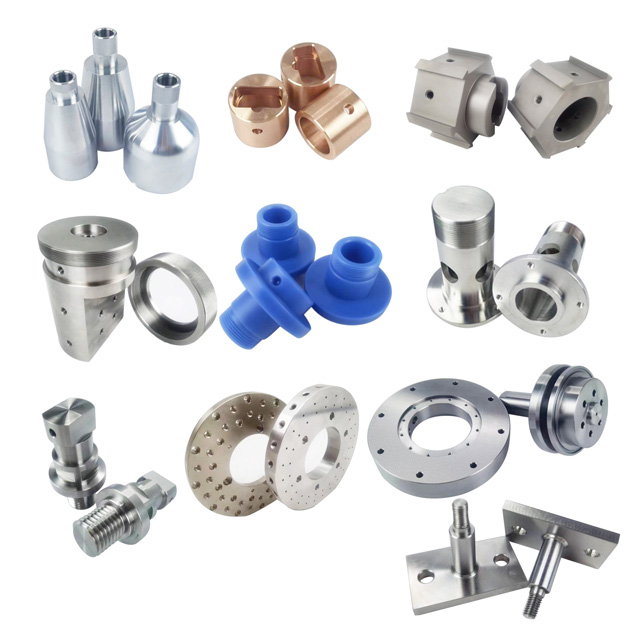
CNC Uses in the Medical Field
CNC (Computer Numerical Control) machining is crucial in the manufacture of medical devices, enabling the creation of complex components. Key medical applications for machining include surgical instruments, electronic device parts, and medical implants. Whether it's surgical instruments or implants, CNC machining ensures exceptional precision and consistency, meeting the rigorous standards of the medical industry. CNC technology enables complex geometries and tight tolerances to be achieved with unprecedented accuracy, which is particularly crucial for minimally invasive and delicate procedures.
In the medical field, materials commonly used for CNC machining include titanium, stainless steel, and polyetheretherketone (PEEK). Titanium is a preferred material due to its excellent biocompatibility, corrosion resistance, and high strength-to-weight ratio. Stainless steel is widely used in surgical instruments and implantable devices due to its durability and sterilization compatibility. Furthermore, biocompatible polymers such as PEEK are attracting attention for their versatility and radiolucency, making them suitable for a variety of implants and medical applications.
As medical technology continues to advance, CNC machining remains at the forefront of driving innovation and pushing the boundaries of healthcare.
Processing | CNC Turning, CNC Milling, Laser Cutting, Bending, Spinning, Wire Cutting, Stamping, Electric Discharge Machining (EDM), Injection Molding | |||
Materials | Aluminum: 2000 series, 6000 series, 7075, 5052, etc. | |||
Stainless steel: SUS303, SUS304, SS316, SS316L, 17-4PH, etc. | ||||
Steel: 1214L/1215/1045/4140/SCM440/40CrMo, etc. | ||||
Brass: 260, C360, H59, H60, H62, H63, H65, H68, H70, Bronze, Copper | ||||
Titanium: Grade F1-F5 | ||||
Plastic: Acetal/POM/PA/Nylon/PC/PMMA/PVC/PU/Acrylic/ABS/PTFE/PEEK etc. | ||||
Surface Treatment | Anodized, Bead Blasted, Silk Screen, PVD Plating, Zinc/Nickel/Chrome/Titanium Plating, Brushing, Painting, Powder Coated, Passivation, Electrophoresis, Electro Polishing, Knurl, Laser/Etch/Engrave etc. | |||
Tolerance | ±0.002 ~ ±0.005mm | |||
Surface Roughness | Min Ra 0.1~3.2 | |||
1.Direct OEM/0DM manufacturer, advanced produce technical,the highest tolerance we can reach to ±0.005mm;
2.Complete produce equipment and test equipment. Independent Engineer team, to check drawings, provide quotation, write machining process, guide production.
3.Independent PMC department, to make production plan and manage delivery time.
4.Quick proofing, short delivery time, usually is 3-15 days
4.Quick proofing, short delivery time, usually is 3-15 days
5 .The company has gathered a rich group of technologicallyadvanced modern talents, which has laid a stable foundationfor the long-term development of the company.
6.Complex and difficult surface and functional structureof the hand plate model, We can all mold quickly.xxx
What is precision medical machining?
Precision medical machining encompasses multiple disciplines and technologies within the medical device industry, encompassing diagnostics, treatments, surgical tools, and materials. These intersecting fields aim to improve the standard of patient healthcare. Manufacturing processes are crucial for the emergence of new technologies and the advancement of treatments offered by healthcare providers, and precision medical machining plays a key role in this process.
Medical CNC machining is a precision-driven and quality-driven industry. CNC (Computer Numerical Control) is a subtractive manufacturing process that creates high-precision parts from raw materials by cutting and drilling. Over the past 65 years, the technology has evolved as manufacturing capabilities have increased. The industry is supported by both large companies and smaller medical device machine shops.
Some commonly used technologies include:
CNC drilling: Used to create holes, slots, and other geometric shapes, with programmable depths.
CNC lathes: Used to rotate the material and cut shapes using carbide tools, suitable for manufacturing cylinders and similar shapes.
CNC milling: Available on 3-, 4-, and 5-axis machines, it can produce very complex parts.
CNC laser cutting: Used to cut materials, particularly thinner ones. CNC plasma cutting: Primarily used in industrial applications, it can cut a wide variety of materials.
CNC water jet cutting: Utilizes high-pressure water and abrasives to cut a variety of materials without generating heat.
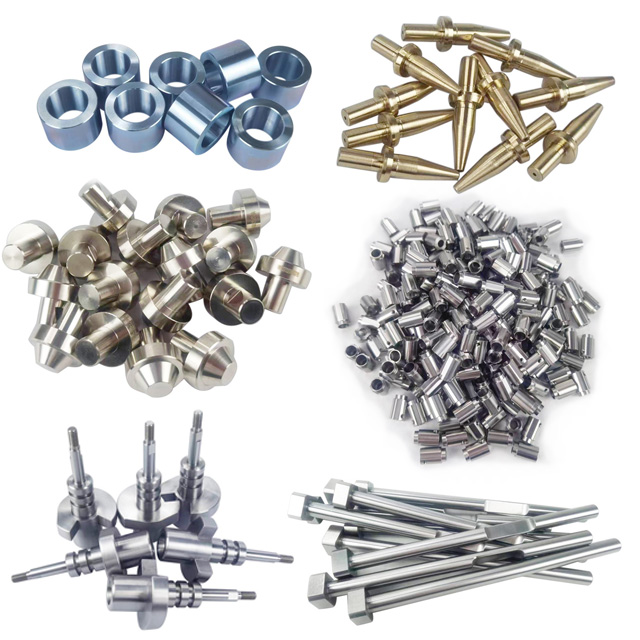
Need high-quality custom metal parts? Contact Quality Metal Fabricators Inc today for a quote!


























Recommend Products
 Providing precision engineering machining services including CNC turning and milling services, CNC lathe components. cnc turning service
 Precision CNC parts for motorcycles and automotive machinery.
 CNC Machining Services in China for High Precision Parts
 Specializing in precision CNC machining for plastic components and tool steel.