


Specializing in Polished Parts, Bearing Components, and Bar-Turned Aluminum Parts.
Hongsinn-579
Experience Excellence: Polished Precision, Bearing Expertise, and Aluminum Innovation. Elevate Your Projects Today!
Delivery
FOB
minimum order
1 piece
Supply Ability
5000piece / Week
Country of Origin
Shenzhen
Stock Time
7~15Day
Quantity:
US $0.59 - US $10.68 / piece
Specializing in Polished Parts, Bearing Components, and Bar-Turned Aluminum Parts.
polished parts for flawless finishes, parts of a bearing for mechanical motion control, and bar turning aluminum parts for lightweight strength.

Turning
Turning is a machining process in which a lathe rotates metal while a cutting tool moves linearly along its diameter to remove metal, creating a cylindrical part. The angle of the cutting tool can be adjusted to create various shapes and contours.
Turning can be performed manually or automated using a CNC machine. CNC machining is often used when the part's size and shape require extreme precision. This high-precision machining method ensures consistent and high-quality parts and is widely used in various industrial manufacturing applications.
Turning can be performed on manual lathes, which typically require constant operator supervision, or on automated lathes. The most common type of automation today is computer numerical control (CNC).
During turning, a workpiece (usually a block of relatively hard material such as metal or wood) is rotated. The tool moves along one, two, or even three axes of motion to produce precise diameters and depths. This process can create a variety of geometric shapes on the outer surface of a cylinder and is suitable for manufacturing tubular components and other complex shapes.
CNC machining significantly improves turning accuracy and consistency, making mass production of complex parts more efficient and controllable.
Processing | CNC Turning, CNC Milling, Laser Cutting, Bending, Spinning, Wire Cutting, Stamping, Electric Discharge Machining (EDM), Injection Molding | |||
Materials | Aluminum: 2000 series, 6000 series, 7075, 5052, etc. | |||
Stainless steel: SUS303, SUS304, SS316, SS316L, 17-4PH, etc. | ||||
Steel: 1214L/1215/1045/4140/SCM440/40CrMo, etc. | ||||
Brass: 260, C360, H59, H60, H62, H63, H65, H68, H70, Bronze, Copper | ||||
Titanium: Grade F1-F5 | ||||
Plastic: Acetal/POM/PA/Nylon/PC/PMMA/PVC/PU/Acrylic/ABS/PTFE/PEEK etc. | ||||
Surface Treatment | Anodized, Bead Blasted, Silk Screen, PVD Plating, Zinc/Nickel/Chrome/Titanium Plating, Brushing, Painting, Powder Coated, Passivation, Electrophoresis, Electro Polishing, Knurl, Laser/Etch/Engrave etc. | |||
Tolerance | ±0.002 ~ ±0.005mm | |||
Surface Roughness | Min Ra 0.1~3.2 | |||
1.Direct OEM/0DM manufacturer, advanced produce technical,the highest tolerance we can reach to ±0.005mm;
2.Complete produce equipment and test equipment. Independent Engineer team, to check drawings, provide quotation, write machining process, guide production.
3.Independent PMC department, to make production plan and manage delivery time.
4.Quick proofing, short delivery time, usually is 3-15 days
4.Quick proofing, short delivery time, usually is 3-15 days
5 .The company has gathered a rich group of technologicallyadvanced modern talents, which has laid a stable foundationfor the long-term development of the company.
6.Complex and difficult surface and functional structureof the hand plate model, We can all mold quickly.xxx
Tools Used in the Turning Process
In turning, the primary tools used are single-point cutting tools, which are used to remove material from the rotating workpiece and lathe. Turning tool design varies depending on the specific application requirements.
The CNC turning process also relies on CNC lathes. Types of lathes used for turning include turret lathes, engine lathes, and special-purpose lathes. These lathes can be manually operated or CNC-controlled to meet different production needs.
Materials Used in Turning
The primary materials used in turning are metals. These include alloy steels, carbon steel, cast iron, stainless steel, aluminum, copper, magnesium, and zinc. However, the process is also capable of machining plastic parts and can be used with other materials such as ceramics, composites, thermoplastics, and thermosets. This diverse selection of materials makes turning suitable for a wide range of industrial applications.
How the Turning Process Works
The turning process utilizes a lathe to move the tool along the surface of a rotating workpiece in linear motion, removing material around the circumference until the desired diameter is reached. This process can produce cylindrical parts with external and internal features such as grooves, tapers, and threads. By precisely controlling the tool's movement, high precision of shape and size can be achieved.
Turning involves removing material from a rotating workpiece using a single-point cutting tool. Turning tools are designed for specific applications and can be used for a variety of applications, including roughing, finishing, facing, threading, parting, forming, undercutting, and grooving. This versatility makes turning suitable for a wide range of manufacturing processes.
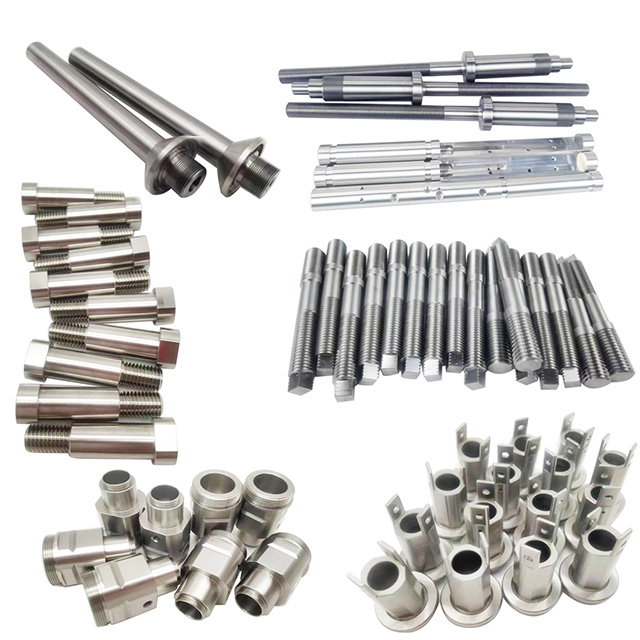
The synergy between polished parts, bearing components, and bar turned aluminum parts enables advanced mechanical systems across industries. Understanding their manufacturing nuances ensures optimal component selection for your specific application requirements.
Need precision polished components, bearing parts, or CNC-turned aluminum solutions? Our AS9100-certified facility specializes in micron-level precision manufacturing. Request a quote today for your project.

























Recommend Products
 Providing precision engineering machining services including CNC turning and milling services, CNC lathe components. cnc turning service
 Precision CNC parts for motorcycles and automotive machinery.
 CNC Machining Services in China for High Precision Parts
 Specializing in precision CNC machining for plastic components and tool steel.