Precision CNC Machining for Medical Parts
Hongsinn-746
Discover the benefits of our precision part manufacturing tailored for the medical industry. Our CNC machining services deliver intricate designs and tight tolerances, ensuring your components perform flawlessly. Partner with us for innovative solutions and unmatched quality. Contact us now!
Delivery
FOB
minimum order
1 piece
Supply Ability
5000piece / Week
Country of Origin
Shenzhen
Stock Time
7~15Day
Quantity:
US $0.59 - US $10.68 / piece
Precision CNC Machining for Medical Parts
The world of precision parts manufacturing, the critical role of CNC machining accuracy, and the expertise of medical CNC machining services combine to ensure that life-saving devices and equipment are produced to meet stringent regulatory standards and performance requirements.
Product Description: | CNC Machining | |||
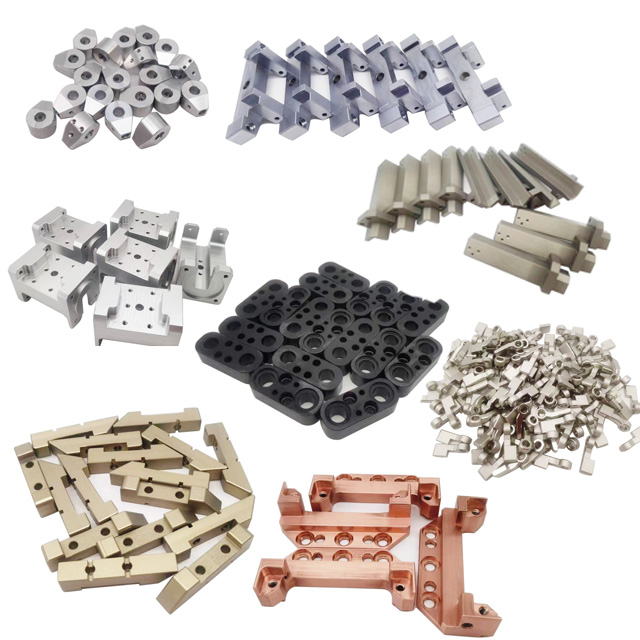
Material Capabilities | Precious Metals,Hardened Metals,Stainless Steel201 , 304,316, Steel Alloy,Plastic,POM, PVC,Aluminum Alloy6061,6063,7005, 7075,Brass,Bronze,Copper | |||
Place of Origin | Guangdong China | |||
Type | OEM,ODM,Cnc Machining, Drilling,Broaching,Rapid Prototype,Milling,Turning,Laser Cutting, Wired Cutting,wire EDM, 3D print,Sheet Metal, Hot forging,Vacuum Casting,Injection Molding,Stamping | |||
Micro Machining or Not | Micro Machining | |||
Finish | Polished,Anodizing,Hard anodized,Brushed,Electroplating | |||
Tolerance | >+/-0.02mm | |||
Applicable industry | New Energy Vehicles,Semiconductors,Optics,Communication Electronics,Construction Machinery,Machine Automation,Equipment, MedicalCare,Automotive,Aerospace,Robots,Agricultural machinery, Industrial machinery and Other Fields | |||
Precision Manufacturing: What is it?
Precision manufacturing is the process of transforming a design into a highly accurate and workable component. It relies on tools like computer numerical control (CNC) machines to remove specific areas from the material until the finished shape is achieved.
As part sizes decrease, precision becomes increasingly important. While precision engineering focuses on the design of the component, precision manufacturing focuses on the actual manufacturing process. CNC machines are capable of cutting to exacting specifications, producing small, accurate parts with tightly controlled tolerances and virtually no errors.
Precision manufacturing offers significant advantages, especially when users need high-quality products quickly and on a limited budget. Over the years, manufacturers have continuously evolved their processes, incorporating advanced computer programming and innovative technologies, enabling them to quickly respond to changing market demands.
The Future of Precision Manufacturing
Precision manufacturing will continue to strive to improve the accuracy, quality, speed, and cost-effectiveness of complex parts. Technological advances have already profoundly transformed the manufacturing landscape, and we can expect even more exciting innovations in the future. The Industrial Internet of Things will enable real-time monitoring of equipment health through embedded sensors. Increasing the number of axes in CNC machine tools will increase their flexibility, further enhancing precision and manufacturing speed. Furthermore, sustainability remains a key concern across industries, with increasing consumer demand for renewable resources and a reduced carbon footprint. Precision manufacturing processes must continue to evolve to reduce carbon emissions and utilize renewable energy to meet this global demand.
In short, the future of precision manufacturing is promising. As a flexible and innovative process, this trend is expected to continue, bringing even more opportunities to the industry.

Precision Manufacturing Industries and Applications
Precision manufacturing is crucial in many industries due to its tight tolerances, repeatability, and robust capabilities. It has a wide range of applications in machining and creating finished products. Here are some of the most common areas:
Prototyping: Many industries require exact replicas of designs. Precision manufacturing is ideally suited to creating detailed and precise prototypes that meet design requirements.
Automotive: The automotive industry involves complex components, such as engines and chassis. Precision manufacturing is capable of producing many of these high-quality parts.
Medical: Technological advances have transformed the medical industry, with advanced machines even capable of performing surgery. Medical components require microscopic details, a demand that can be met through precision manufacturing.
Aerospace: Aerospace applications require state-of-the-art and reliable equipment and processing tools, adapted to rugged and durable materials. Precision manufacturing is capable of producing the high-quality components required for aerospace performance and safety.
Defense: Similar to the aerospace industry, defense requires components to maintain reliability under the most challenging conditions. Precision manufacturing is used throughout the defense industry, from developing prototypes to full-scale parts.
Electronics: Precision manufacturing has enabled the miniaturization of complex electronic components in many consumer electronics applications, such as computers and mobile phones, improving performance and functionality.