Spindle CNC Milling Solutions for Precision Components
Hongsinn-902
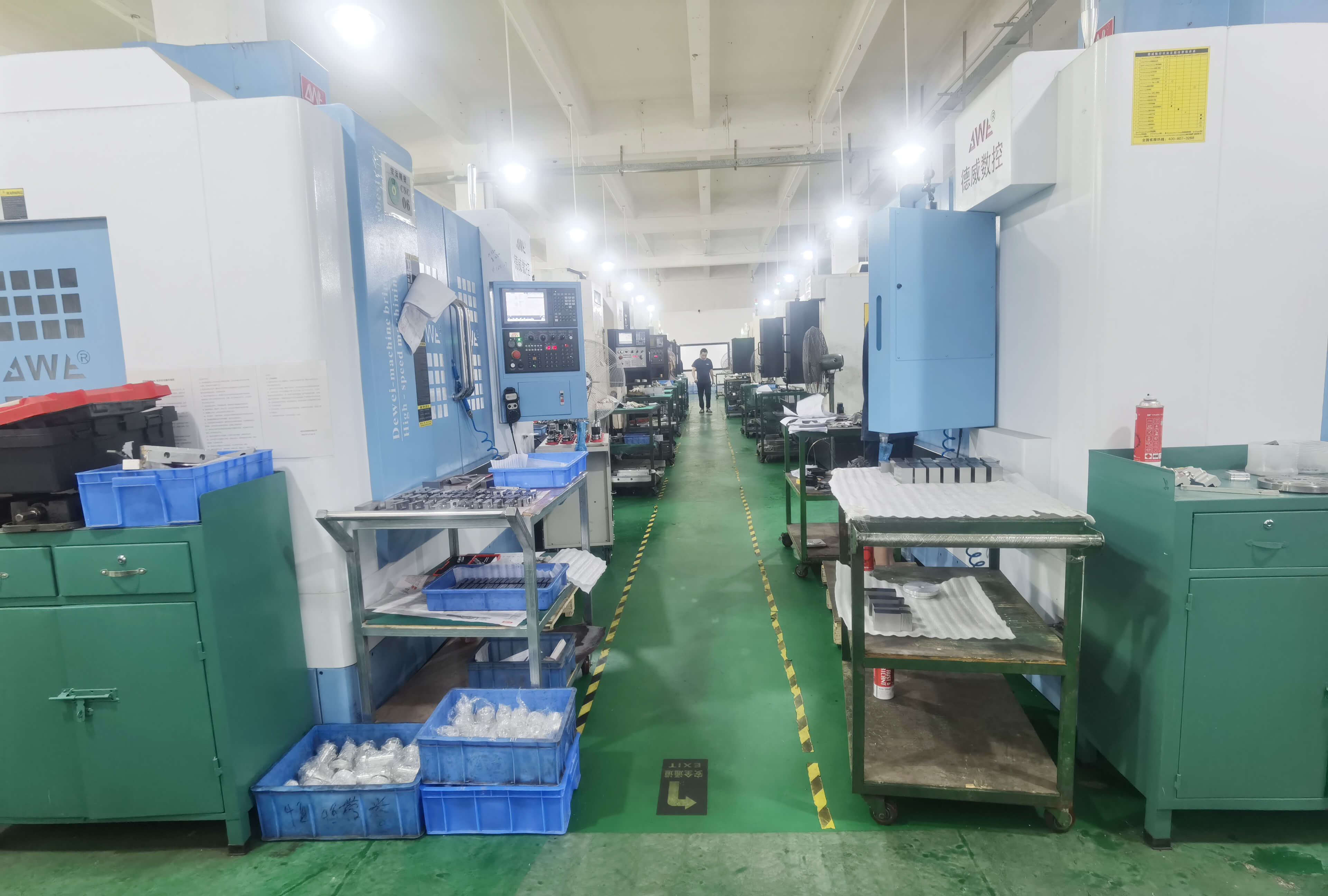
Our CNC plastic milling services deliver reliable solutions for complex designs, while our spindle CNC milling ensures top-notch performance.
Delivery
FOB
minimum order
1 piece
Supply Ability
5000piece / Week
Country of Origin
Shenzhen
Stock Time
7~15Day
Quantity:
US $0.59 - US $10.68 / piece
Our CNC plastic milling services deliver reliable solutions for complex designs, while our spindle CNC milling ensures top-notch performance.
The modern manufacturing landscape has evolved to include highly specialized service categories such as CNC lathe milling services, precision CNC plastic milling services, and technologically advanced spindle CNC milling operations.
|
CNC Milling of Copper
Milling copper is the process of machining parts from solid copper bars and copper blanks. Due to copper's toughness and ductility, machining it is quite challenging. As a highly ductile soft metal, copper is easily deformed under high cutting forces. Furthermore, CNC milling generates heat during the milling process, which further enhances copper's ductility.
Factors affecting surface finish when milling copper parts include tool selection, lubrication method, chip load, cutting speed, and feed rate. A CNC milling machine equipped with appropriate tools can generally mill copper effectively. If a proper milling program is followed and good process control is maintained, CNC milling services can achieve satisfactory results with minimal burrs.
An effective method for milling copper is using a multi-pass technique. This technique is characterized by a shallow depth of cut, which helps improve the surface finish of the milled copper and ensures the quality of the final product.
CNC Milling of Steel
Steelmaking is the process of combining iron and carbon alloys with additives. Machining tools such as CNC milling cutters can also be used to mill stainless steel. Steel is a tough material, and its machinability is primarily determined by its carbon content.
In metal manufacturing, milling is the most common method for material removal. Due to the extremely high precision and accuracy of CNC milling machines, they are frequently used to cut various metals. The results and surface finish of milling can vary depending on the type, strength, and hardness of the material used.
Some metal alloys, such as titanium, possess very high durability and can withstand harsh environments. Other commonly used metal alloys include aluminum, copper, brass, zinc, bronze, stainless steel, and steel. Metal milling processes typically include shaping, cutting, drilling, and tapping operations. These techniques enable a wide variety of applications in the manufacture of high-precision parts.
Multi-axis CNC milling machines: Multi-axis CNC milling machines can cut at more angles and move on more axes. This flexibility makes them suitable for machining complex shapes.
Four-axis and five-axis milling machines: Four-axis and five-axis milling machines are more advanced forms of CNC milling, allowing for more efficient machining of complex shapes, such as ship and aircraft propeller impellers. These machines are often used for prototyping because the tool can be precisely positioned at multiple angles during cutting.
Two-axis milling machines: Two-axis milling machines are a less common CNC machining mode because they are limited to movement on only two axes, limiting their ability to machine complex parts.
Three-axis milling machines: The tool on a three-axis milling machine can move on the X, Y, and Z axes, cutting workpieces in any direction and performing various milling operations on vertical or horizontal axes. However, this type of machine also has some limitations; the uniform angles reduce its ability to cut certain complex production parts.