


CNC turning and mill-turn centers, specializing in bar turning for automotive industry applications
Hongsinn-337
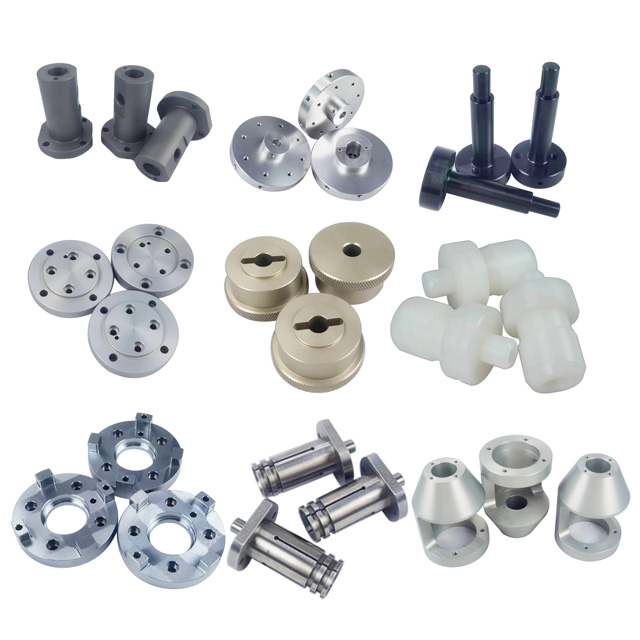
Revolutionize Your Automotive Manufacturing Process! ? Explore our CNC turning and mill-turn centers, specializing in bar turning for precise automotive industry applications. Enhance efficiency and quality with our advanced solutions today!
Delivery
FOB
minimum order
1 piece
Supply Ability
5000piece / Week
Country of Origin
Shenzhen
Stock Time
7~15Day
Quantity:
US $0.50 - US $10.89 / piece
CNC turning and mill-turn centers, specializing in bar turning for automotive industry applications
CNC turning centers, CNC mill-turn centers, and CNC bar turning are essential technologies in modern manufacturing, particularly for the automotive industry. These advanced machining processes enable the production of high-quality, precision components that meet the demanding requirements of automotive applications. This article explores these technologies, their benefits, and how they are transforming automotive manufacturing.
Our Services | CNC Turning, CNC Milling, Laser Cutting, Bending, Spinning, Wire Cutting, Stamping, Electric Discharge Machining (EDM), Injection Molding. |
Materials Available | Aluminum: 2000 series, 6000 series, 7075, 5052, etc. |
Stainless Steel: SUS303, SUS304, SS316, SS316L, 17-4PH, etc. | |
Steel: 1214L/1215/1045/4140/SCM440/40CrMo, etc. | |
Brass: 260, C360, H59, H60, H62, H63, H65, H68, H70, Bronze, Copper. | |
Titanium: Grade F1-F5. | |
Plastic: Acetal/POM/PA/Nylon/PC/PMMA/PVC/PU/Acrylic/ABS/PTFE/PEEK etc. | |
Surface Treatment | Anodized, Bead Blasted, Silk Screen, PVD Plating, Zinc/Nickel/Chrome/Titanium Plating, Brushing, Painting, Powder Coated, Passivation, Electrophoresis, Electro Polishing, Knurl, Laser/Etch/Engrave etc. |
Tolerance | ±0.002 ~ ±0.005mm |
Surface Roughness | Min Ra 0.1~3.2 |
Common Metals Suitable for Small-Batch CNC Machining
CNC machining, also known as computer-aided machining, is the process of transforming traditional manual operations into computer-programmed machining. This method significantly reduces the number of tooling required while maintaining consistent machining quality and precision, making it particularly suitable for machining a wide variety of small batches of parts. The following are the main metal materials suitable for small-batch CNC machining:
- Aluminum Alloys: Such as AL6061 and AL7075, with AL7075 exhibiting superior strength and performance compared to AL6061.
- Copper: Includes red copper (pure copper) and brass. Red copper possesses excellent electrical conductivity and weldability, while brass is known for its high strength and good machinability.
- Steel: 45# Steel: Offers high strength and good machinability, suitable for various applications.
- 40Cr Steel: Widely used in machinery manufacturing, exhibiting excellent overall performance.
- Q235 Steel: A carbon structural steel that can be used directly without heat treatment.
- Stainless Steel 303/304: Provides good machinability and high toughness, effectively preventing rust.
Plastic materials, such as ABS, PA, POM, and PC, can be selected according to customer requirements.
These metal and plastic materials, due to their unique properties, are widely used in various fields to meet the needs of small-batch production.
These metal and plastic materials, due to their unique properties, are widely used in various fields to meet the needs of small-batch production.


Overview of CNC Machining Centers
CNC stands for"Computer Numerical Control,"directly representing how a computer digitally controls the machining process. It is a widely used machining technology in manufacturing and can almost be considered a hallmark of modern manufacturing.
CNC machining can easily achieve multi-axis simultaneous machining, making it particularly suitable for machining complex curved surfaces. Without CNC, traditional machine tools would almost certainly be unable to complete the same complex workpieces. Furthermore, CNC systems facilitate the implementation of flexible manufacturing systems.
Learning CNC is not difficult; in fact, if you have basic mobile phone skills, you can learn to operate a CNC machine. However, it is recommended that you first understand the machining principles of ordinary machine tools and basic mechanical manufacturing knowledge, including drawing interpretation and tolerance concepts, before learning CNC. This will significantly improve your learning effectiveness.
In short, traditional machine tools are directly controlled by operators, while CNC achieves automated machining through the control of numerical control systems, thus meeting more complex and high-speed machining needs.
Overview of CNC Machining
CNC machining refers to the process where a control system issues commands to cause the cutting tool to perform various required movements, representing the shape, dimensions, and machining process requirements of the workpiece using numbers and letters. This process is generally performed on CNC machine tools. A CNC machine tool is a computer-controlled machine tool; these computers can be special-purpose or general-purpose, collectively referred to as a CNC system.
In a CNC machine tool, its movements and auxiliary actions are controlled by commands issued by the CNC system. The CNC system commands are written by programmers based on the workpiece material, machining requirements, machine tool characteristics, and the system's specified command format (such as NC language). According to the program commands, the CNC system sends operation or termination information to servo devices and other functional components, thereby controlling various movements of the machine tool.
Machining Center
A machining center is a highly automated, multi-functional CNC machine tool equipped with a tool magazine and automatic tool changer. After a workpiece is clamped once in the machining center, multiple processes can be completed on multiple surfaces, while also possessing multiple tool changing or tool selection functions, which significantly improves production efficiency.
A machining center is a highly automated, multi-functional CNC machine tool equipped with a tool magazine and automatic tool changer. After a workpiece is clamped once in the machining center, multiple processes can be completed on multiple surfaces, while also possessing multiple tool changing or tool selection functions, which significantly improves production efficiency.
Machining centers are mainly classified into boring, milling, and turning types according to the machining process, and into three-axis, four-axis, and five-axis machining centers according to the number of control axes. This classification allows them to meet machining needs of varying complexity.
FAQ:
Q1:What's kinds of information you need for quotation?
Hongsinn: You can provide 2D/3D drawing or send your sample to our factory, then we can make according to your sample.
Q2: Can we sign NDA?
Hongsinn: Sure. We never divulge customers' information to anyone else.
Q3: Do you provide sample?
Hongsinn: Yes, we can provide you sample before mass order.
Q4: How can you ensure the quality?
Hongsinn: We have profesional QC department to guarantee the quality.
Recommend Products
 Providing precision engineering machining services including CNC turning and milling services, CNC lathe components. cnc turning service
 Precision CNC parts for motorcycles and automotive machinery.
 CNC Machining Services in China for High Precision Parts
 Specializing in precision CNC machining for plastic components and tool steel.