


Precision EDM machining services for aviation manufacturing.
Hongsinn-380
Experience unparalleled precision and quality in aviation manufacturing with our specialized EDM machining services. Trust us to take your aerospace projects to new heights of excellence.
Delivery
FOB
minimum order
1 piece
Supply Ability
5000piece / Week
Country of Origin
Shenzhen
Stock Time
7~15Day
Quantity:
US $0.50 - US $10.89 / piece
Precision EDM machining services for aviation manufacturing.
Modern manufacturing relies on advanced machining techniques to produce high-precision components for critical industries. Among these, EDM machining, machining in manufacturing, and precision machining for aviation play vital roles in ensuring accuracy, efficiency, and reliability. This guide explores these technologies, their applications, and their benefits in today’s industrial landscape.
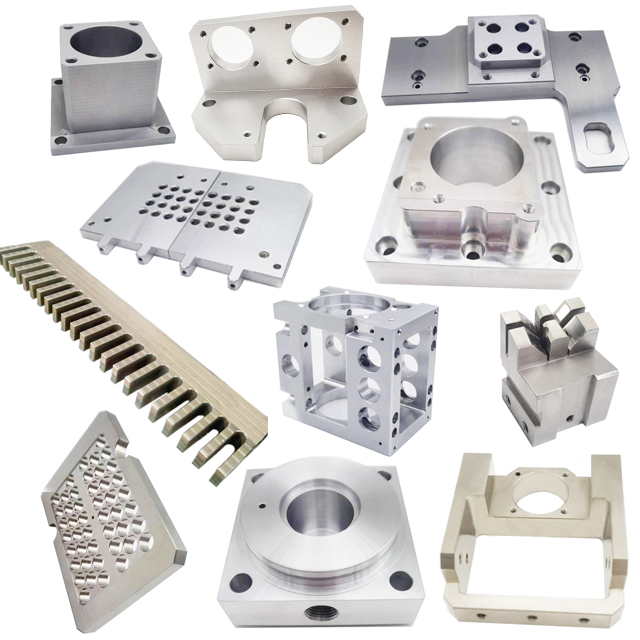
Our Services | CNC Turning, CNC Milling, Laser Cutting, Bending, Spinning, Wire Cutting, Stamping, Electric Discharge Machining (EDM), Injection Molding. |
Materials Available | Aluminum: 2000 series, 6000 series, 7075, 5052, etc. |
Stainless Steel: SUS303, SUS304, SS316, SS316L, 17-4PH, etc. | |
Steel: 1214L/1215/1045/4140/SCM440/40CrMo, etc. | |
Brass: 260, C360, H59, H60, H62, H63, H65, H68, H70, Bronze, Copper. | |
Titanium: Grade F1-F5. | |
Plastic: Acetal/POM/PA/Nylon/PC/PMMA/PVC/PU/Acrylic/ABS/PTFE/PEEK etc. | |
Surface Treatment | Anodized, Bead Blasted, Silk Screen, PVD Plating, Zinc/Nickel/Chrome/Titanium Plating, Brushing, Painting, Powder Coated, Passivation, Electrophoresis, Electro Polishing, Knurl, Laser/Etch/Engrave etc. |
Tolerance | ±0.002 ~ ±0.005mm |
Surface Roughness | Min Ra 0.1~3.2 |
Overview of Machining
Machining is a manufacturing process that involves the controlled removal of material (usually metal) from large blocks of raw material through cutting to form a desired shape or part. It is a subtractive manufacturing method, unlike additive manufacturing (such as 3D printing), which builds objects through controlled material addition.
Machining is a primary process in manufacturing many metal products, but it can also be applied to other materials such as wood, plastics, ceramics, and composites. Those who specialize in machining are called machinists.
As a business investment, machining is typically carried out in a machine shop. These shops may consist of one or more areas containing the main machine tools. While machine shops can exist as standalone operations, many businesses maintain in-house machine shops or tool rooms to support their specific needs.
Modern machining extensively utilizes Computer Numerical Control (CNC) technology, where computers control the movement and operation of milling machines, lathes, and other cutting machines, thereby improving precision and efficiency. This technology enables machining to meet higher production standards and complex design requirements.
Turning Operations
Turning operations are performed by rotating the exterior of a workpiece against a non-rotating cutting tool that moves into the workpiece. The rotation of the workpiece provides relative motion to the tool, allowing for efficient material removal. Lathes are the primary machine tools used for turning and are widely used in parts manufacturing.
Boring
Boring is the process of machining the inner surface of a hole to increase its diameter. This can be done by rotating the workpiece on a lathe (called internal turning) or by rotating the tool on a milling machine, where the tool rotates around the circumference of the hole. Boring operations are commonly used to improve the accuracy and surface finish of holes.
Boring is the process of machining the inner surface of a hole to increase its diameter. This can be done by rotating the workpiece on a lathe (called internal turning) or by rotating the tool on a milling machine, where the tool rotates around the circumference of the hole. Boring operations are commonly used to improve the accuracy and surface finish of holes.
Drilling
Drilling is the process of creating or refining a hole by using a rotating cutting tool (usually a drill bit) with its cutting edge located on the lower surface and edges to make axial contact with the workpiece. Drilling can be performed on lathes, milling machines, or drilling machines, and even with hand tools.
Drilling is the process of creating or refining a hole by using a rotating cutting tool (usually a drill bit) with its cutting edge located on the lower surface and edges to make axial contact with the workpiece. Drilling can be performed on lathes, milling machines, or drilling machines, and even with hand tools.
Threading and Tapping
Threading or tapping refers to cutting a defined helix (thread) into a hole (tapping) or shaft (threading) to achieve a constant pitch and a specific geometry. These threads are used to accept opposite threads and hold items together in rotational motion (e.g., screws).
Threading or tapping refers to cutting a defined helix (thread) into a hole (tapping) or shaft (threading) to achieve a constant pitch and a specific geometry. These threads are used to accept opposite threads and hold items together in rotational motion (e.g., screws).

Sawing:The purpose of sawing is to cut bars into smaller lengths. Using a saw or cutter, the material is cut by a rotary (circular saw) or linear (band saw) blade until it is cut in half. Depending on the material, the saw blade speed (measured in meters per minute or feet per minute) may need to be adjusted between 200 and 1000 feet per minute to suit the cutting requirements.
Milling: Milling is an operation in which a cutting edge cuts along its cylindrical surface of the workpiece to remove material from the rotating tool axis and the lower edge profile. Milling machines are the primary machine tools used in milling. Modern CNC machine tools can combine the operations of lathes and milling machines, increasing machining flexibility and efficiency.
Broaching: Broaching can refer to two forms: linear broaching and rotary broaching. Linear broaching involves a multi-toothed tool being pressed through a hole to cut the desired shape (e.g., splines, squares, or hexagons). Rotary broaching involves rotating the tool in a special tool holder, causing the tool to oscillate around an off-axis. The tool and workpiece work together during machining to cut the desired shape on the workpiece. Shaped workpieces are the process of removing material from a workpiece through the linear motion of a non-rotating cutting tool. This tool advances along the workpiece surface, designed to cut the plane geometry. Shaped workpieces typically use high-speed steel dies with shapes and geometries similar to lathe dies, similar to turning, but performed on a linear axis instead of a circular axis.
Grinding is the process of removing material through the rapid movement or rotation of an abrasive grain (such as stone, alumina, or diamond). The abrasive surface of the grinding tool removes material through friction to achieve the desired surface finish and dimensional accuracy.

FAQ:
Q1:What's kinds of information you need for quotation?
Hongsinn: You can provide 2D/3D drawing or send your sample to our factory, then we can make according to your sample.
Q2: Can we sign NDA?
Hongsinn: Sure. We never divulge customers' information to anyone else.
Q3: Do you provide sample?
Hongsinn: Yes, we can provide you sample before mass order.
Q4: How can you ensure the quality?
Hongsinn: We have profesional QC department to guarantee the quality.


