Industry-focused CNC machining, fabricated metal, and metal mesh fabric solutions.
Hongsinn-474
Elevate your industry with precision CNC machining and expert metal fabrication services. Explore innovative solutions in fabricated metal and metal mesh fabric for your projects.
Delivery
FOB
minimum order
1 piece
Supply Ability
5000piece / Week
Country of Origin
Shenzhen
Stock Time
7~15Day
Quantity:
US $0.59 - US $10.68 / piece
Industry-focused CNC machining, fabricated metal, and metal mesh fabric solutions.
At Shenzhen Hongsinn Precision Co., Ltd., we specialize in CNC machining for industries that demand uncompromising quality and precision. As leaders in fabricated metal components and innovative metal mesh fabric solutions, we combine cutting-edge technology with engineering expertise to deliver superior products for aerospace, automotive, construction, and industrial applications.

Types of Aluminum Used in CNC Machining
In CNC machining, aluminum often appears in various alloy forms to meet various industrial needs. The following are the most commonly used aluminum alloys in CNC machining:
Cast Aluminum Alloys
The casting process involves pouring molten aluminum into a mold and cooling it into shape. These alloys are affordable, versatile, lightweight, durable, and perform well at high temperatures. The automotive industry is the largest user of cast alloys, accounting for approximately two-thirds of the aluminum used in vehicles. Common components include engine components, housings, and steering columns. Cast alloys are less expensive to produce, and mold flexibility allows for a wide variety of shapes. However, they tend to have lower tensile strength than wrought alloys, making them more difficult to machine and more resistant to wear from cutting tools.
Aluminum-Lithium (Al-Li) Alloys
Because lithium is the lowest-density metallic element, these alloys are significantly lighter than pure aluminum or other materials. Al-Li alloys are primarily used in the aerospace industry for lower wing skins, inner wing structures, fuselages, and fan blades. While Al-Li alloys offer weight advantages, they suffer from lower machinability and weaker fracture toughness (the ability to resist crack propagation). Production volumes of these alloys are relatively small, leading to higher prices.
Wrought Aluminum Alloys Wrought alloys are formed in the solid state by forming molten aluminum into billets or slabs, then using tools to roll, forge, stamp, or extrude. These alloys are the most widely used materials in aluminum CNC machining because they offer superior mechanical properties and structural integrity to cast alloys. Wrought alloys are easier to machine, produce a smoother surface finish, and wear less on the cutting tool's edge.
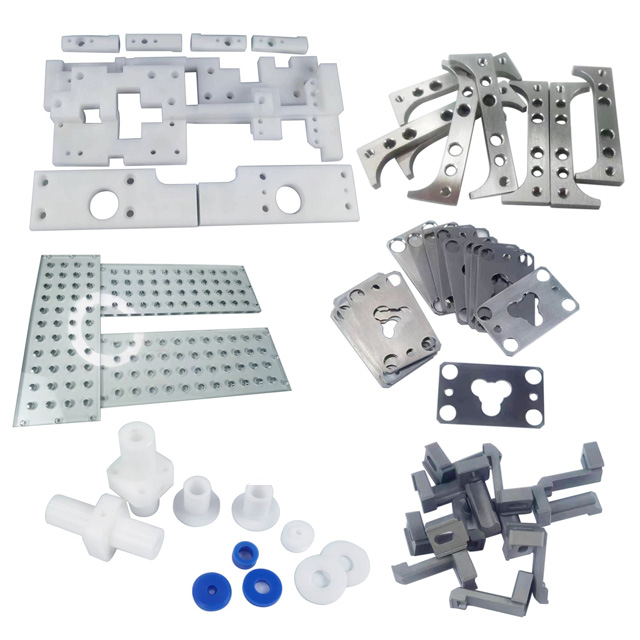
Processing | CNC Turning, CNC Milling, Laser Cutting, Bending, Spinning, Wire Cutting, Stamping, Electric Discharge Machining (EDM), Injection Molding | |||
Materials | Aluminum: 2000 series, 6000 series, 7075, 5052, etc. | |||
Stainless steel: SUS303, SUS304, SS316, SS316L, 17-4PH, etc. | ||||
Steel: 1214L/1215/1045/4140/SCM440/40CrMo, etc. | ||||
Brass: 260, C360, H59, H60, H62, H63, H65, H68, H70, Bronze, Copper | ||||
Titanium: Grade F1-F5 | ||||
Plastic: Acetal/POM/PA/Nylon/PC/PMMA/PVC/PU/Acrylic/ABS/PTFE/PEEK etc. | ||||
Surface Treatment | Anodized, Bead Blasted, Silk Screen, PVD Plating, Zinc/Nickel/Chrome/Titanium Plating, Brushing, Painting, Powder Coated, Passivation, Electrophoresis, Electro Polishing, Knurl, Laser/Etch/Engrave etc. | |||
Tolerance | ±0.002 ~ ±0.005mm | |||
Surface Roughness | Min Ra 0.1~3.2 | |||
1.Direct OEM/0DM manufacturer, advanced produce technical,the highest tolerance we can reach to ±0.005mm;
2.Complete produce equipment and test equipment. Independent Engineer team, to check drawings, provide quotation, write machining process, guide production.
3.Independent PMC department, to make production plan and manage delivery time.
4.Quick proofing, short delivery time, usually is 3-15 days
4.Quick proofing, short delivery time, usually is 3-15 days
5 .The company has gathered a rich group of technologicallyadvanced modern talents, which has laid a stable foundationfor the long-term development of the company.
6.Complex and difficult surface and functional structureof the hand plate model, We can all mold quickly.xxx
CNC Machining of Steel and Aluminum
Aluminum and steel are the most widely used metals in CNC machining. Choosing the right material for a specific application comes down to the following five factors:
Cost
Mild and carbon steel are generally less expensive than aluminum alloys, while stainless steel tends to be more expensive. However, metal prices are influenced by global demand, raw material, energy, and transportation costs. When considering cost, it's also important to consider the material's durability. Short-term savings may result in higher expenses in the long term.
Mild and carbon steel are generally less expensive than aluminum alloys, while stainless steel tends to be more expensive. However, metal prices are influenced by global demand, raw material, energy, and transportation costs. When considering cost, it's also important to consider the material's durability. Short-term savings may result in higher expenses in the long term.
Corrosion Resistance
Both aluminum and stainless steel offer good resistance to rust and corrosion, but stainless steel is more expensive. Manufacturers or end users may need to paint, treat, or coat other types of steel to protect the finished product, especially when exposed to environmental conditions. These coatings not only add weight and cost, but also require regular reapplication, increasing maintenance expenses.
Both aluminum and stainless steel offer good resistance to rust and corrosion, but stainless steel is more expensive. Manufacturers or end users may need to paint, treat, or coat other types of steel to protect the finished product, especially when exposed to environmental conditions. These coatings not only add weight and cost, but also require regular reapplication, increasing maintenance expenses.
Weight
Aluminum is two to three times heavier than steel. Almost every company seeks to achieve the same or better product performance while using lighter materials. This"lightweighting"trend has led many component manufacturers to choose aluminum over steel.
Aluminum is two to three times heavier than steel. Almost every company seeks to achieve the same or better product performance while using lighter materials. This"lightweighting"trend has led many component manufacturers to choose aluminum over steel.
Strength
While steel is heavier than aluminum, this makes it a more durable material. Steel is very strong and does not easily warp, bend, or deform under force, heat, or weight. Furthermore, aluminum's surface is more susceptible to scratches and dents.
While steel is heavier than aluminum, this makes it a more durable material. Steel is very strong and does not easily warp, bend, or deform under force, heat, or weight. Furthermore, aluminum's surface is more susceptible to scratches and dents.
Machinability
Aluminum's lower density than steel allows it to be machined three to four times faster. Aluminum also cools faster than steel, reducing the time required to machine a part (cycle time) and the amount of coolant required. Compared to steel, aluminum requires significantly less cutting force, reducing wear on cutting tools and helping to maintain tool sharpness. Furthermore, aluminum machining can be performed on smaller, less expensive machines.
Aluminum's lower density than steel allows it to be machined three to four times faster. Aluminum also cools faster than steel, reducing the time required to machine a part (cycle time) and the amount of coolant required. Compared to steel, aluminum requires significantly less cutting force, reducing wear on cutting tools and helping to maintain tool sharpness. Furthermore, aluminum machining can be performed on smaller, less expensive machines.
Start Your Project Today
Our capabilities in CNC machining for industries, fabricated metal products, and metal mesh fabric solutions are available with:
Free design consultations
Prototype development in as little as 5 days
Volume production with flexible order quantities
Just-in-time delivery options
Contact our engineering team to discuss your specific industrial manufacturing needs.