Specializing in close-tolerance precision machining and fabricating high-quality metals
Hongsinn-472
Elevate your projects with our high-quality precision machining and expert metal fabrication services. From close-tolerance machining to fabricating metals, we deliver excellence in every detail.
Delivery
FOB
minimum order
1 piece
Supply Ability
5000piece / Week
Country of Origin
Shenzhen
Stock Time
7~15Day
Quantity:
US $0.59 - US $10.68 / piece
Specializing in close-tolerance precision machining and fabricating high-quality metals
At Shenzhen Hongsinn Precision Co., Ltd., we specialize in close tolerance precision machining and comprehensive fabricating metal services, delivering high-quality fabricated metals for industries where accuracy and reliability are non-negotiable. Our advanced manufacturing capabilities combine cutting-edge technology with decades of expertise to produce components that meet the most stringent quality standards.

Advantages of Metals
Metals are widely used in a variety of fields, and their advantages include:
Versatility
There are many different metals and alloys, each with unique properties and characteristics, making them suitable for a variety of applications.
There are many different metals and alloys, each with unique properties and characteristics, making them suitable for a variety of applications.
Ease of Manufacturing
Metals are relatively easy to work with, can be formed into objects of various sizes and shapes, and can be manufactured using a variety of different methods.
Metals are relatively easy to work with, can be formed into objects of various sizes and shapes, and can be manufactured using a variety of different methods.
Low Cost
While the extraction and refining of raw metals is relatively complex, through various processes, products made from metals can be mass-produced at a relatively reasonable price.
While the extraction and refining of raw metals is relatively complex, through various processes, products made from metals can be mass-produced at a relatively reasonable price.
Conductivity
Metals' excellent electrical conductivity makes them essential for electrical wiring and electronic components.
Metals' excellent electrical conductivity makes them essential for electrical wiring and electronic components.
Strength
Most metals used in manufacturing are strong, durable, heat-resistant, have high melting points, and are easy to clean. Alloys created by combining metals can further enhance these properties.
Most metals used in manufacturing are strong, durable, heat-resistant, have high melting points, and are easy to clean. Alloys created by combining metals can further enhance these properties.
Recycling
With the exception of lead and mercury, almost all metals can be recycled, and recycling is increasing annually. For example, nearly 700 million tons of steel and over 30 million tons of aluminum are recycled globally each year.
With the exception of lead and mercury, almost all metals can be recycled, and recycling is increasing annually. For example, nearly 700 million tons of steel and over 30 million tons of aluminum are recycled globally each year.
Processing | CNC Turning, CNC Milling, Laser Cutting, Bending, Spinning, Wire Cutting, Stamping, Electric Discharge Machining (EDM), Injection Molding | |||
Materials | Aluminum: 2000 series, 6000 series, 7075, 5052, etc. | |||
Stainless steel: SUS303, SUS304, SS316, SS316L, 17-4PH, etc. | ||||
Steel: 1214L/1215/1045/4140/SCM440/40CrMo, etc. | ||||
Brass: 260, C360, H59, H60, H62, H63, H65, H68, H70, Bronze, Copper | ||||
Titanium: Grade F1-F5 | ||||
Plastic: Acetal/POM/PA/Nylon/PC/PMMA/PVC/PU/Acrylic/ABS/PTFE/PEEK etc. | ||||
Surface Treatment | Anodized, Bead Blasted, Silk Screen, PVD Plating, Zinc/Nickel/Chrome/Titanium Plating, Brushing, Painting, Powder Coated, Passivation, Electrophoresis, Electro Polishing, Knurl, Laser/Etch/Engrave etc. | |||
Tolerance | ±0.002 ~ ±0.005mm | |||
Surface Roughness | Min Ra 0.1~3.2 | |||
1.Direct OEM/0DM manufacturer, advanced produce technical,the highest tolerance we can reach to ±0.005mm;
2.Complete produce equipment and test equipment. Independent Engineer team, to check drawings, provide quotation, write machining process, guide production.
3.Independent PMC department, to make production plan and manage delivery time.
4.Quick proofing, short delivery time, usually is 3-15 days
4.Quick proofing, short delivery time, usually is 3-15 days
5 .The company has gathered a rich group of technologicallyadvanced modern talents, which has laid a stable foundationfor the long-term development of the company.
6.Complex and difficult surface and functional structureof the hand plate model, We can all mold quickly.xxx
What are the most common alloy metals?
The properties of alloy metals can be significantly enhanced by mixing them with other metals or elements. Here are some common alloy metals and their applications:
Brass
Composed of copper and zinc, it is often used in musical instruments due to its excellent acoustic properties and ductility. Brass is also widely used as a low-cost substitute for precious metals.
Composed of copper and zinc, it is often used in musical instruments due to its excellent acoustic properties and ductility. Brass is also widely used as a low-cost substitute for precious metals.
Bronze
Composed primarily of copper and approximately 12% tin, it may be mixed with other metals and nonmetals. Bronze is commonly used in applications such as coins, medals, sculptures, musical instruments, bearings, electrical connectors, and springs.
Composed primarily of copper and approximately 12% tin, it may be mixed with other metals and nonmetals. Bronze is commonly used in applications such as coins, medals, sculptures, musical instruments, bearings, electrical connectors, and springs.
Cast Iron
An iron-carbon alloy containing at least 2% carbon. Although cast iron is brittle, its relatively low melting point, good fluidity, machinability, and resistance to deformation and wear make it a popular engineering material for pipes, structures, machinery, and automotive parts.
An iron-carbon alloy containing at least 2% carbon. Although cast iron is brittle, its relatively low melting point, good fluidity, machinability, and resistance to deformation and wear make it a popular engineering material for pipes, structures, machinery, and automotive parts.
Cast Steel
Made from wrought iron melted with charcoal, it has a low carbon content (0.1% to 0.5%). Cast steel is more difficult to cast than cast iron and shrinks more, requiring a more thorough inspection process.
Made from wrought iron melted with charcoal, it has a low carbon content (0.1% to 0.5%). Cast steel is more difficult to cast than cast iron and shrinks more, requiring a more thorough inspection process.
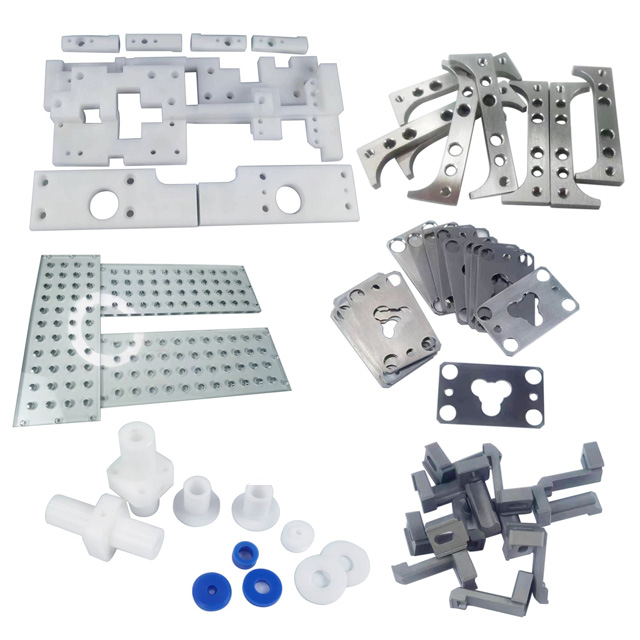
Ferrous alloys: Iron-based alloys used in the production of steel, iron, and alloys.
Low-melting-point alloys: Due to their heat stability, they are often used as coolants and are also used in nuclear reactor bonding and automatic fire sprinkler heads.
Non-ferrous alloys: Alloys that do not contain significant amounts of iron. Although more expensive, they are lightweight, non-magnetic, and have increased electrical conductivity and corrosion resistance.
Steel: Composed of iron, carbon, and other elements, it is a primary material for buildings, infrastructure, tools, ships, automobiles, and other applications. Steel grades include long steel, flat carbon steel, weathering steel (COR-TEN), stainless steel, and mild steel.
Stainless steel: Steel alloys containing more than 11% chromium offer excellent corrosion and heat resistance and are widely used in industrial equipment, tableware, kitchenware, surgical instruments, and more.
Tool steel: A type of carbon steel and alloy steel with extremely high wear resistance that can maintain a sharp edge at high temperatures, making it suitable for making tools for cutting, pressing, extruding, or punching metal or other materials.
Contact our engineering team to discuss your specific requirements for fabricated metals and precision components.