Explore high-precision machining solutions with leading fabricated metal companies.
Hongsinn-473
Discover excellence in high-precision metal fabrication with industry-leading companies. Elevate your projects with top-tier machining solutions and expertly crafted metal products.
Delivery
FOB
minimum order
1 piece
Supply Ability
5000piece / Week
Country of Origin
Shenzhen
Stock Time
7~15Day
Quantity:
US $0.59 - US $10.68 / piece
Explore high-precision machining solutions with leading fabricated metal companies.
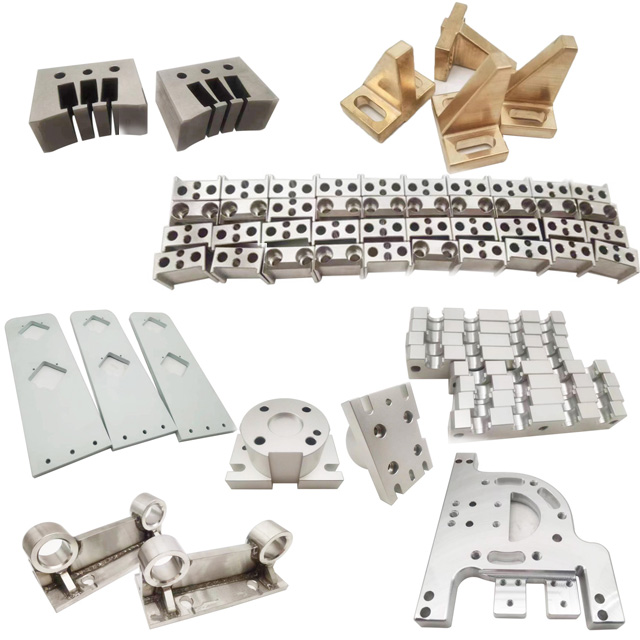
At Shenzhen Hongsinn Precision Co., Ltd., we deliver exceptional fabrication of metal components through our advanced high-precision machining solutions. As one of the leading fabricated metal companies, we combine state-of-the-art technology with decades of expertise to manufacture parts that meet the most stringent quality standards across aerospace, medical, automotive, and industrial sectors.

What is metal fabrication?
Metal fabrication is an ancient art, and humans have been using metals to create a variety of products for thousands of years. Depending on the type of metal, some artifacts date back to several thousand years before Christ. Metals are typically hard, opaque, and lustrous materials with good electrical and thermal conductivity. Of the 118 elements in the periodic table, approximately 91 are metals, which can exist as elements, compounds, or alloys. Metals are generally ductile, allowing them to be hammered or extruded into shapes without breaking or cracking. They also melt easily, allowing them to be fused or melted, and exhibit ductility, allowing them to be stretched into thin wires.
Metals play a vital role in every aspect of our lives, including high-rise buildings, bridges, cars, appliances, jewelry, tools, pipes, and railways.
Metal fabrication is the driving force behind advances in metalworking technology, aiming to apply the science of metals to the most appropriate applications, such as consumer products, transportation, railroads, aviation, and marine applications. With the development of 3D printing technology, the variety of metal materials available is also expanding.
A variety of processes are used to shape metals, including:
Casting
Forging
Rolling
Laser cladding
Extrusion
Sintering
Machining
Manufacturing
3D printing
Forging
Rolling
Laser cladding
Extrusion
Sintering
Machining
Manufacturing
3D printing
Processing | CNC Turning, CNC Milling, Laser Cutting, Bending, Spinning, Wire Cutting, Stamping, Electric Discharge Machining (EDM), Injection Molding | |||
Materials | Aluminum: 2000 series, 6000 series, 7075, 5052, etc. | |||
Stainless steel: SUS303, SUS304, SS316, SS316L, 17-4PH, etc. | ||||
Steel: 1214L/1215/1045/4140/SCM440/40CrMo, etc. | ||||
Brass: 260, C360, H59, H60, H62, H63, H65, H68, H70, Bronze, Copper | ||||
Titanium: Grade F1-F5 | ||||
Plastic: Acetal/POM/PA/Nylon/PC/PMMA/PVC/PU/Acrylic/ABS/PTFE/PEEK etc. | ||||
Surface Treatment | Anodized, Bead Blasted, Silk Screen, PVD Plating, Zinc/Nickel/Chrome/Titanium Plating, Brushing, Painting, Powder Coated, Passivation, Electrophoresis, Electro Polishing, Knurl, Laser/Etch/Engrave etc. | |||
Tolerance | ±0.002 ~ ±0.005mm | |||
Surface Roughness | Min Ra 0.1~3.2 | |||
1.Direct OEM/0DM manufacturer, advanced produce technical,the highest tolerance we can reach to ±0.005mm;
2.Complete produce equipment and test equipment. Independent Engineer team, to check drawings, provide quotation, write machining process, guide production.
3.Independent PMC department, to make production plan and manage delivery time.
4.Quick proofing, short delivery time, usually is 3-15 days
4.Quick proofing, short delivery time, usually is 3-15 days
5 .The company has gathered a rich group of technologicallyadvanced modern talents, which has laid a stable foundationfor the long-term development of the company.
6.Complex and difficult surface and functional structureof the hand plate model, We can all mold quickly.xxx
What is a metal?
Metals are opaque materials that appear shiny and lustrous when polished. They are good conductors of heat and electricity and typically have high melting points.
Most metals are generally hard but soft enough to be shaped by hammering or pressure without breaking or cracking. The versatility of metals allows them to be fused or blended, formed into large solid blocks, or stretched into long, thin wires (a property known as ductility).
Of the 118 elements in the periodic table, approximately 95 are metals, 80 of which are commonly used in manufacturing.
What is Metal Fabrication?
Metal fabrication involves a variety of techniques, typically starting with metal material in the form of sheets, billets, bars, tubes, and more. Here are some common metal fabrication processes:
Turning
A cylindrical piece of metal is placed on a lathe and rotated while cutting at varying points and depths to precisely remove material and form the desired shape.
A cylindrical piece of metal is placed on a lathe and rotated while cutting at varying points and depths to precisely remove material and form the desired shape.
Forming
High-performance mechanical presses bend, stretch, cut, roll, and shape metal parts using pressure and heavy loads.
High-performance mechanical presses bend, stretch, cut, roll, and shape metal parts using pressure and heavy loads.
Milling
A rotating milling cutter mounted on a machine efficiently and accurately cuts the material of a metal part to form the desired shape. With the introduction of computer numerical control (CNC) and automatic tool changers, the traditional"milling machine"evolved into a"machining center"in the 1960s.
A rotating milling cutter mounted on a machine efficiently and accurately cuts the material of a metal part to form the desired shape. With the introduction of computer numerical control (CNC) and automatic tool changers, the traditional"milling machine"evolved into a"machining center"in the 1960s.
Forging
Shaping metal by hammering, pressing, or rolling. Traditionally performed by hand, modern forging often uses hammer presses powered by compressed air, electricity, hydraulics, or steam. Forging is generally categorized as cold, warm, or hot, depending on the temperature at which the process is performed.
Shaping metal by hammering, pressing, or rolling. Traditionally performed by hand, modern forging often uses hammer presses powered by compressed air, electricity, hydraulics, or steam. Forging is generally categorized as cold, warm, or hot, depending on the temperature at which the process is performed.
Welding
Metal is melted and joined together using high temperature and pressure. Welding can use a variety of heat sources, including gas flame, electric arc, laser, electron beam, friction, and ultrasonics.
Metal is melted and joined together using high temperature and pressure. Welding can use a variety of heat sources, including gas flame, electric arc, laser, electron beam, friction, and ultrasonics.
Casting
Metal is heated to a liquid state, poured into a mold, cooled until the liquid solidifies, and then removed. Casting is the preferred process for producing complex shapes, which may be difficult or costly to produce using other methods.
Metal is heated to a liquid state, poured into a mold, cooled until the liquid solidifies, and then removed. Casting is the preferred process for producing complex shapes, which may be difficult or costly to produce using other methods.
Extrusion
Hot or cold metal is forced through a die into the desired shape or contour. The material can be pushed continuously to produce a long line or semi-continuously to produce many individual parts. This process is useful for creating complex cross-sections, offering the advantages of a high-quality surface finish and design freedom.
Hot or cold metal is forced through a die into the desired shape or contour. The material can be pushed continuously to produce a long line or semi-continuously to produce many individual parts. This process is useful for creating complex cross-sections, offering the advantages of a high-quality surface finish and design freedom.
Contact our engineering team today to discuss your project requirements for fabricated metal components.