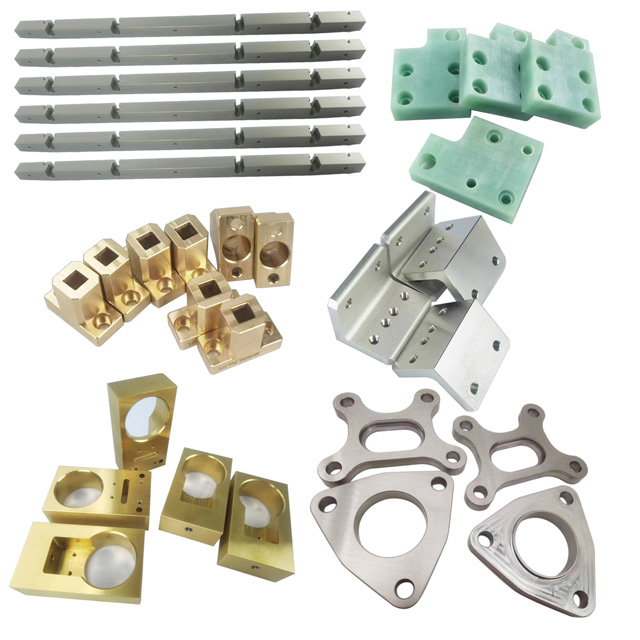
Specializing in high-volume machining of polypropylene and acetal materials.
Hongsinn-525
Efficient Precision Machining: Polypropylene and Acetal Expertise for High-Volume Projects!
Delivery
FOB
minimum order
1 piece
Supply Ability
5000piece / Week
Country of Origin
Shenzhen
Stock Time
7~15Day
Quantity:
US $0.59 - US $10.68 / piece
Specializing in high-volume machining of polypropylene and acetal materials.
Modern manufacturing increasingly relies on specialized plastic machining processes. This comprehensive guide examines three critical production aspects: machining polypropylene components, optimizing high volume machining operations, and precision machining acetal (POM) parts - providing essential knowledge for manufacturers and engineers.

Precision Thread Design
Internal threads can be created using a tap, a cutting tool that, much like a bolt or fastener, is threaded into a workpiece. Alternatively, a specialized tool called a thread mill can be used. Regardless of the method chosen, deep threading presents challenges, primarily due to chip evacuation and radial cutting pressure.
Typically, a thread depth of twice the diameter provides sufficient strength while reducing production costs. If greater strength is required, consider using a reinforced insert, such as a Heli-Coil or Critical insert, to improve thread integrity, particularly for plastic CNC parts.
Thread tolerances are designated by an"H,"with H2 or H3 being the most common. H3 offers greater tolerances but is also more expensive to produce, so in non-critical applications, H2 is preferred to optimize cost and performance.
Anodizing and Plating for Machined Parts
Anodizing is commonly used on aluminum components to reduce the risk of corrosion and add an attractive metallic color to porous aluminum substrates. It effectively resists scratching, and as a natural electrical insulator, anodizing is considered one of the most durable surface treatments. We offer three types of fast-acting anodizing options to protect your parts.
Processing | CNC Turning, CNC Milling, Laser Cutting, Bending, Spinning, Wire Cutting, Stamping, Electric Discharge Machining (EDM), Injection Molding | |||
Materials | Aluminum: 2000 series, 6000 series, 7075, 5052, etc. | |||
Stainless steel: SUS303, SUS304, SS316, SS316L, 17-4PH, etc. | ||||
Steel: 1214L/1215/1045/4140/SCM440/40CrMo, etc. | ||||
Brass: 260, C360, H59, H60, H62, H63, H65, H68, H70, Bronze, Copper | ||||
Titanium: Grade F1-F5 | ||||
Plastic: Acetal/POM/PA/Nylon/PC/PMMA/PVC/PU/Acrylic/ABS/PTFE/PEEK etc. | ||||
Surface Treatment | Anodized, Bead Blasted, Silk Screen, PVD Plating, Zinc/Nickel/Chrome/Titanium Plating, Brushing, Painting, Powder Coated, Passivation, Electrophoresis, Electro Polishing, Knurl, Laser/Etch/Engrave etc. | |||
Tolerance | ±0.002 ~ ±0.005mm | |||
Surface Roughness | Min Ra 0.1~3.2 | |||
1.Direct OEM/0DM manufacturer, advanced produce technical,the highest tolerance we can reach to ±0.005mm;
2.Complete produce equipment and test equipment. Independent Engineer team, to check drawings, provide quotation, write machining process, guide production.
3.Independent PMC department, to make production plan and manage delivery time.
4.Quick proofing, short delivery time, usually is 3-15 days
4.Quick proofing, short delivery time, usually is 3-15 days
5 .The company has gathered a rich group of technologicallyadvanced modern talents, which has laid a stable foundationfor the long-term development of the company.
6.Complex and difficult surface and functional structureof the hand plate model, We can all mold quickly.xxx
Plastics Machining
For production runs of 1,000 or fewer parts, machining plastics is often more cost-effective than injection molding. Furthermore, machining can create parts that are difficult to achieve with molding. These parts may include those with uneven wall thicknesses or those exceeding 0.150 inches (3.81 mm), typically used for fixtures or wear plates.
As part size increases, the overall speed advantage of machining over injection molding at moderate production volumes increases. Furthermore, machining eliminates the risk of sink marks, warpage, and weave lines that can occur in molded parts. Furthermore, machined parts do not require the drafting required for injection molded parts, making the production process simpler and more efficient.
In some cases, engineers might consider using 3D printing to produce parts. However, mechanical parts are cut from solid stock, which gives them several advantages over 3D-printed parts. Because mechanical parts are not layered, they typically have higher physical integrity. Additionally, machining can use materials that 3D printers cannot process and can produce smoother surfaces than printed parts.
Conclusion: Selecting the Right Approach
Understanding the nuances of machining polypropylene versus machining acetal, along with implementing efficient high volume machining strategies, enables manufacturers to produce high-quality plastic components competitively. Each material and production scenario requires specific considerations to optimize quality, cost, and throughput.