What is the difference between titanium alloy and stainless steel? Which one is better?
2025-07-07

Titanium alloy and stainless steel are mainly different in composition, performance, function, etc. Which metal material is better depends on the actual application needs. If the strength-to-weight ratio and corrosion resistance are required, titanium alloy is better; if cost and processing performance are more important, stainless steel is more recommended. Let's learn about the difference between titanium alloy and stainless steel and which one is better.
1. What is the difference between titanium alloy and stainless steel?
Titanium alloy and stainless steel are two common metal materials, which are widely used in modern industry. These two metals are different in many aspects, which are specifically manifested in the following aspects:
1. Different composition
(1) Titanium alloy is an alloy composed of titanium and other elements. Titanium has two isomorphs: below 882℃ is close-packed hexagonal structure a titanium, and above 882℃ is body-centered cubic B titanium.
(1) Titanium alloy is an alloy composed of titanium and other elements. Titanium has two isomorphs: below 882℃ is close-packed hexagonal structure a titanium, and above 882℃ is body-centered cubic B titanium.
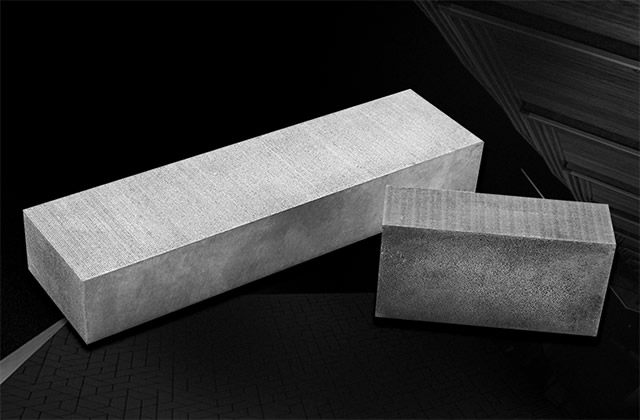
(2) Stainless steel refers to steel that is resistant to corrosion by weak corrosive media such as air, steam, and water, and chemically corrosive media such as acids, alkalis, and salts. It is also called stainless acid-resistant steel. In practical applications, steel that is resistant to corrosion by weak corrosive media is often called stainless steel, while steel that is resistant to corrosion by chemical media is called acid-resistant steel.
2. Different properties
(1) Titanium is a new type of metal. The properties of titanium alloys are related to the impurity content of carbon, nitrogen, hydrogen, oxygen, etc. The impurity content of extremely pure titanium iodide does not exceed 0.1%, but its strength is low and its plasticity is high.
(1) Titanium is a new type of metal. The properties of titanium alloys are related to the impurity content of carbon, nitrogen, hydrogen, oxygen, etc. The impurity content of extremely pure titanium iodide does not exceed 0.1%, but its strength is low and its plasticity is high.
(2) Stainless steel has good weldability; corrosion resistance: Most stainless steel products require good corrosion resistance; polishing performance: In today's society, stainless steel products generally undergo a polishing process during production, and only a few products such as water heaters and water dispenser tanks do not require polishing.
3. Different functions
(1) Titanium alloys are mainly used to make aircraft engine compressor parts, followed by rockets, missiles and high-speed aircraft structural parts.
(2) 304 stainless steel is widely used in curtain walls, side walls, roofs and other construction purposes, but in severely corrosive industrial or marine atmospheres, 316 stainless steel should be used.
2. Which is better, titanium alloy or stainless steel?
Both titanium alloy and stainless steel have unique properties that make them suitable for different applications. It is not possible to generalize which of the two metal materials is better. You should choose according to your actual needs.
1. Strength-to-weight ratio
If weight reduction is a priority, titanium alloy may be a better choice because it has a higher strength-to-weight ratio and is about 60% lighter than stainless steel.
If weight reduction is a priority, titanium alloy may be a better choice because it has a higher strength-to-weight ratio and is about 60% lighter than stainless steel.
2. Corrosion resistance
For applications in harsh environments, titanium alloys stand out for their superior corrosion resistance.
For applications in harsh environments, titanium alloys stand out for their superior corrosion resistance.
3. Cost
Stainless steel is generally more cost-effective than titanium alloys, making it a popular choice for large projects and applications where cost is an important factor.
Stainless steel is generally more cost-effective than titanium alloys, making it a popular choice for large projects and applications where cost is an important factor.
4. Manufacturing and machining
Compared with titanium alloys, stainless steel is usually easier to process, such as milling, bending, and stamping, while titanium alloys are more difficult to process and require the use of specialized tools and equipment.
Compared with titanium alloys, stainless steel is usually easier to process, such as milling, bending, and stamping, while titanium alloys are more difficult to process and require the use of specialized tools and equipment.
What is 3D printing and how is it done?
Related Article

As an emerging technology, 3D printing plays an important role in the development plan of my country and Industry 4.0. 3D printing technology is a kind of rapid prototyping technology. It is a technology based on digital model files, using powdered metal or plastic and other bondable materials to construct objects by printing layer by layer.
What is 3D printing and how is it done?