
Vacuum coating: processes and applications
Vacuum coating: processes and applications
In this comprehensive guide, we’ll take an in-depth look at the vacuum coating process, which involves depositing thin films of material onto substrates in a vacuum environment. This critical technology is designed to improve the performance of parts and assemblies, giving them high-performance coatings with enhanced durability, reflectivity, corrosion resistance, and insulation properties. This process is critical to a wide range of applications across a wide range of industries, from precision CNC machined parts to optical and electronic components. We’ll also discuss the metals used, the benefits of vacuum coating, and its specific applications in different fields.
What is vacuum coating process?
The vacuum coating process involves applying a thin layer of metal or other material to a substrate in a controlled vacuum environment. By eliminating air and contaminants, a high-quality, uniform layer of material can be achieved during the coating process, significantly improving the physical, chemical and aesthetic properties of the component. It is often used to protect CNC machined parts from wear, corrosion and oxidation, while also imparting functional properties such as conductivity or insulation.

Which metals can be vacuum coated?
Several metals can be effectively vacuum deposited, depending on the intended application and desired material properties. Here are some of the most commonly vacuum deposited metals:
Aluminum is one of the most popular metals for vacuum coating due to its excellent reflectivity, lightness, and ability to form a protective oxide layer. Aluminum coatings are widely used for reflective surfaces in optical components, automotive parts, and lighting applications.
Copper is used in vacuum coatings for applications requiring electrical conductivity, such as in the electrical and electronics sectors. Its excellent thermal conductivity also makes it ideal for coating parts in thermal management applications, such as heat sinks and thermally conductive surfaces.
Titanium is well known for its high strength, light weight and corrosion resistance and is widely used in vacuum coating for aerospace, medical devices and decorative finishes. Titanium nitride (TiN) coatings are often used for cutting tools and wear-resistant parts due to their excellent hardness and durability.
Vacuum Coating Process
Vacuum coating encompasses several deposition techniques that allow for the precise application of thin films on various substrates. The most common methods of vacuum coating are:
Metallization Methods
1. Physical Vapor Deposition (Thermal Evaporation)
Physical vapor deposition (thermal evaporation) is a process in a vacuum chamber where metals are vaporized by heat or electron beam. The metal atoms are then transported through the vacuum and condense on the substrate surface, forming a thin coating. This method is widely used for the preparation of decorative coatings, functional coatings for cutting tools and wear-resistant surfaces.
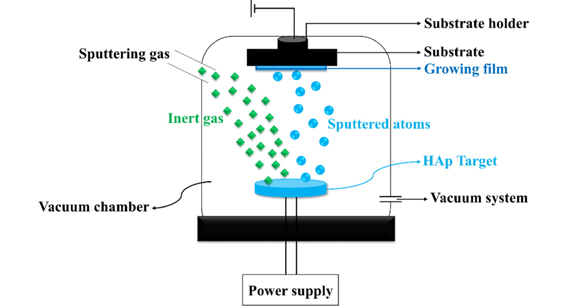
2. Chemical Vapor Deposition (Sputtering)
In the chemical vapor deposition (CVD) or sputtering process, a gas containing the desired coating material is introduced into a vacuum chamber. An electric field bombards the gas molecules, causing them to break down and deposit a thin film of material on the substrate. Sputtering technology is commonly used for optical coatings, semiconductor components, and protective layers for electronic devices.

Vacuum Coating Process Flow
The vacuum coating process consists of several stages, from part preparation to final inspection. Here is a step-by-step breakdown of a typical vacuum coating process:
Step 1 – Custom Fixtures and Part Clamping
To ensure that the parts receive a uniform and consistent coating during the deposition process, custom jigs and clamping fixtures need to be designed and prepared before the process begins to ensure that the CNC machined parts are safely and securely fixed in place. Proper clamping ensures that the parts receive a uniform and consistent coating during the deposition process.
Step 2 – Loading
Next, the parts are placed into a vacuum chamber, ensuring they are positioned correctly for optimal coating results. Proper alignment and placement are necessary to ensure uniform coating thickness and avoid defects.
Step 3 – Apply Primer
In some cases, a primer layer is applied to the substrate to enhance the adhesion of the vacuum coating. This primer improves the bond between the part and the coating, ensuring long-lasting performance.
Step 4 – Vacuum Coating
Once the part is secured and the chamber sealed, a vacuum environment is established to remove all air and contaminants. Next, the coating material (metal or compound) is vaporized and deposited on the part surface by PVD or sputtering techniques. This stage is critical to achieving the desired coating properties such as thickness, uniformity, and reflectivity.
Step 5 – Apply Topcoat
In some cases, a topcoat is used to protect the vacuum coating from environmental damage, wear, or oxidation. In addition, this topcoat can enhance the aesthetic appeal of the part by adding color or gloss.
Step 6 – Quality Inspection
Once painted, each part undergoes a thorough quality inspection to ensure that the coating meets the required standards. This includes visual inspection, measuring coating thickness, and performing adhesion tests to verify the integrity and consistency of the coating.

Standards:
In order to maintain high quality production, the vacuum coating process must comply with international quality standards, such as:
- ISO 9001: Ensures quality management systems and consistent production.
- ISO/TS 16949: Specific to the automotive industry, ensuring quality in production and assembly.
- AS9100: Quality standards for aerospace manufacturing, including stringent requirements for vacuum-coated parts.
Benefits of Vacuum Coating
Vacuum coating offers many advantages that make it an attractive choice for a wide range of applications:
Low cost: Despite the high precision of the process, vacuum coating is a cost-effective option, especially when mass-producing parts. The controlled environment and fast deposition rate reduce resource waste and improve overall efficiency.
Improve the reflective properties of parts: Parts treated with vacuum coating usually have higher reflectivity, making them very suitable for use in the optical field, such as mirrors, lenses and reflective surfaces of lighting equipment.
Protection from oxygen and moisture: Vacuum coating creates a barrier that effectively protects parts from oxidation, corrosion and moisture, thereby extending the service life of components.
Modulating conductivity: Depending on the coating material chosen, vacuum coating can enhance or limit the conductivity of a component, making it suitable for a wide range of electronic and electrical applications.
Compared to other processes such as chrome plating, vacuum coating is safer: compared with traditional processes that use toxic chemicals, vacuum coating generally has less impact on the environment and workers' health.
Functional and decorative coating needs: Vacuum coating can meet both functional needs (such as corrosion resistance and electrical insulation) and decorative needs (such as improving appearance and adding color).
What is the difference between vacuum coating and electroplating?
While both vacuum coating and electroplating are used to apply thin layers of metal to a substrate, they differ significantly in the process and results.
1. Metal coating materials
Vacuum coating can deposit a variety of metals, including aluminum, titanium, and gold. Electroplating is more commonly used for metals such as nickel, copper, and chromium.
2. Electroplating Environment
Electroplating involves immersing the part in a solution containing metal ions and using an electric current to coat the part. In contrast, vacuum coating occurs in a vacuum chamber, which ensures a clean, controlled environment that prevents contamination.
3. Color and Durability
Vacuum coating generally produces a more uniform and durable finish with the ability to add a variety of colors, while electroplating may have limitations in achieving certain colors or uniformity. However, electroplated coatings may be thicker and more suitable for heavy-duty applications.
Vacuum coating generally produces a more uniform and durable finish with the ability to add a variety of colors, while electroplating may have limitations in achieving certain colors or uniformity. However, electroplated coatings may be thicker and more suitable for heavy-duty applications.
4. Environmentally friendly
Compared with electroplating, which involves toxic chemicals and may produce hazardous waste, vacuum coating is more environmentally friendly. Vacuum coating does not require the use of harmful chemicals, reducing the impact on the environment.
Compared with electroplating, which involves toxic chemicals and may produce hazardous waste, vacuum coating is more environmentally friendly. Vacuum coating does not require the use of harmful chemicals, reducing the impact on the environment.
Application of vacuum coating
Vacuum coating is widely used in various industries and has both functional and decorative advantages:
1.Vacuum coating decoration
Vacuum coating is commonly used to enhance the appearance of consumer products, automotive decoration and jewelry. By depositing a thin film of metal or metal alloy on the surface of plastic, glass or metal parts, manufacturers can give products metallic luster, rich colors and more refined textures, thereby creating high-quality and attractive decorative effects.
Vacuum coating is commonly used to enhance the appearance of consumer products, automotive decoration and jewelry. By depositing a thin film of metal or metal alloy on the surface of plastic, glass or metal parts, manufacturers can give products metallic luster, rich colors and more refined textures, thereby creating high-quality and attractive decorative effects.
2. Vacuum Metallization for Insulation Applications
In electronic and electrical applications, vacuum metallization is used to create thin insulating layers to protect components from electrical interference or heat. It is commonly used in capacitors, printed circuit boards, and semiconductor devices.
In electronic and electrical applications, vacuum metallization is used to create thin insulating layers to protect components from electrical interference or heat. It is commonly used in capacitors, printed circuit boards, and semiconductor devices.
3. Vacuum coating can improve barrier properties
In packaging and food preservation, vacuum coating is used to create a barrier that prevents moisture, oxygen and other contaminants from damaging the products inside. This improves the shelf life of food and medicine.
In packaging and food preservation, vacuum coating is used to create a barrier that prevents moisture, oxygen and other contaminants from damaging the products inside. This improves the shelf life of food and medicine.
4. Vacuum coating for reflectivity of optical components
Optical components, such as mirrors, lenses and reflectors, benefit from vacuum coating to improve reflectivity. These coatings are critical in applications such as telescopes, cameras and lighting systems that require precise light reflection.
Optical components, such as mirrors, lenses and reflectors, benefit from vacuum coating to improve reflectivity. These coatings are critical in applications such as telescopes, cameras and lighting systems that require precise light reflection.
Conclusion
Vacuum coating technology plays an important role in modern manufacturing and is a common and indispensable process. It provides functional and aesthetic enhancements to CNC machined parts, electronic products, optical components, etc. Through excellent corrosion resistance, electrical insulation properties, and decorative surface treatment, vacuum coating is able to meet the needs of multiple industries such as automotive and aerospace.
In addition, the environmental protection and cost-effectiveness of vacuum coating make it a popular choice for precision CNC machining factories and custom CNC machining services. This technology not only enhances the market competitiveness of products, but also promotes sustainable manufacturing practices.
Types and uses of copper Differences between pure copper and brass
What should you pay attention to when customizing the text and logos of CNC machined parts?

