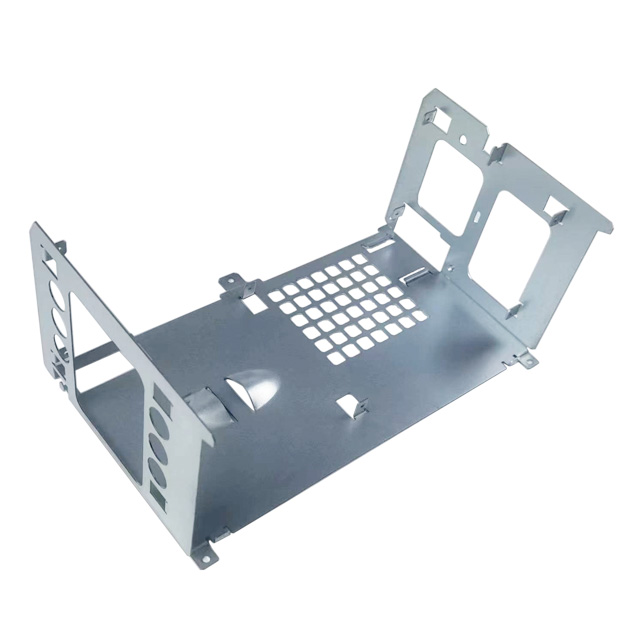
Dive into sheet metal fabrication processes including galvanizing and folding techniques.
Dive into sheet metal fabrication processes including galvanizing and folding techniques.
| ||||||||||||||||||||||||||||||||||||||||||||||||||||||
1. Cutting:
Cutting is the initial step in sheet metal fabrication, where the metal is sheared, sawed, or lasered into the desired shape and size. Techniques such as laser cutting offer precision and flexibility in creating intricate designs.
2. Bending:
Bending is a crucial process that involves deforming the metal to create angles, curves, and shapes. Press brakes are commonly used to bend sheet metal accurately and consistently.
3. Welding:
Welding plays a vital role in joining metal components together. Techniques like MIG, TIG, and spot welding are commonly used in sheet metal fabrication to create strong and durable connections.
4. Forming:
Forming processes, such as stamping and deep drawing, are used to shape the metal into complex geometries. These processes are essential for creating parts with precise dimensions and intricate details.
5. Finishing:
Finishing processes like grinding, polishing, and painting are important for enhancing the appearance and durability of sheet metal components. Surface treatments such as powder coating and anodizing provide additional protection and aesthetics.
6. Assembly:
Assembly is the final step in sheet metal fabrication, where individual components are joined together to create the final product. This step requires precision and attention to detail to ensure that all parts fit together seamlessly.