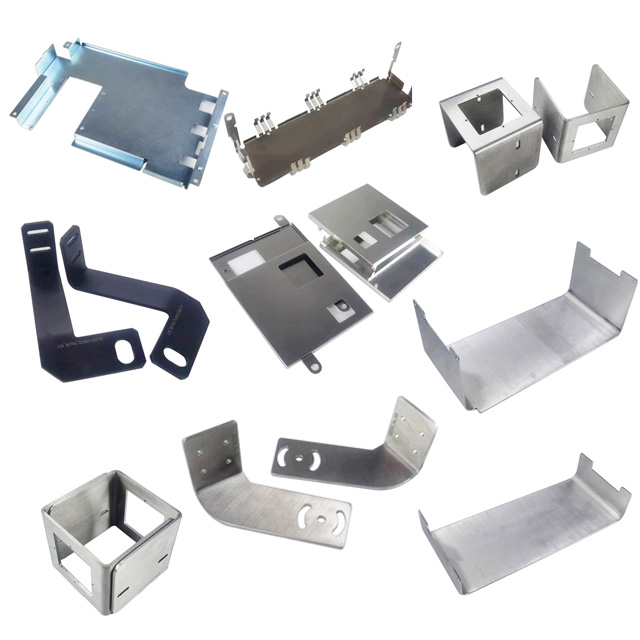
Explore Sheet Metal Fabrication: Spinning, Rolling, and Riveting Processes Demystified.
Explore Sheet Metal Fabrication: Spinning, Rolling, and Riveting Processes Demystified.
Sample production time | 3 days after drawing confirmation |
Drawing Format | Auto CAD DWG, 3D(IGS, STP, STL and X-T),PDF |
Material | Aluminum, stainless steel, copper, brass, galvinized etc. |
Size | Customized |
Thickness | 0.1 -12 mm |
Technics | Laser cut, bend, weld, stamp |
Surface treatment | Powder coating, electroplating, oxide,anodization, etc |
Tolarence | +/- 0.03 ~ +/-0.05 mm |
Certificates | ISO 9001:2015, IATF 16949:2016, PPAP, ROHS, BV, CCC, etc |
Supply Capacity | 5000pcs ~ 20000pcs / Week |
Quality Control | 100% Inspection |
Process | Custom Fabrication Based On Your Drawings |
Understanding the Sheet Metal Rolling Process:
Sheet metal rolling is a cold-forming process that deforms metal sheets by passing them through a series of rollers to achieve the desired curvature or shape. This method is commonly used to produce cylindrical components like tubes, pipes, cylinders, and cones with precision and accuracy.
Key Techniques in Sheet Metal Rolling:
Three-Roll Bending: In three-roll bending, the metal sheet is passed through a set of three rollers - the top roll and two bottom rolls. This process is ideal for creating cylindrical shapes and curves in metal sheets.
Four-Roll Bending: Four-roll bending involves passing the metal sheet through four rollers - two top rolls and two bottom rolls. This method offers greater precision and control over the bending process, making it suitable for more complex shapes and profiles.
Incremental Rolling: Incremental rolling is a technique where small sections of the metal sheet are rolled at a time, allowing for precise control over the curvature and ensuring uniform deformation along the length of the sheet.
Tools and Equipment in Sheet Metal Rolling:
Sheet metal rolling requires specialized tools and equipment to carry out the bending process effectively. Rolling machines, also known as plate rolling machines or roll benders, are essential for shaping metal sheets into curved or cylindrical forms. These machines come in various sizes and configurations to accommodate different sheet thicknesses and bending requirements.
Applications of Sheet Metal Rolling:
The versatility of the sheet metal rolling process makes it invaluable in a variety of industries, including automotive, aerospace, construction, and manufacturing. Rolled metal components are used in applications such as structural supports, conveyor systems, storage tanks, architectural elements, and industrial machinery.
Quality Control in Sheet Metal Rolling:
Maintaining quality control is crucial in sheet metal rolling to ensure the accuracy, consistency, and integrity of the rolled components. Inspection processes, material testing, and adherence to industry standards help uphold the quality of the finished products and meet customer specifications.