


Sheet metal welding, stamping, and straightening processes.
Hongsinn-213
Unlock the Potential of Metal Transformation! Our expert services cover sheet metal welding, stamping, and straightening processes. Elevate your projects with precision and quality.
Delivery
FOB
minimum order
1 piece
Supply Ability
5000piece / Week
Country of Origin
Shenzhen
Stock Time
7~15Day
Quantity:
US $0.55 - US $3.39 / piece
Welding process for sheet metal
When it comes to working with sheet metal, understanding the welding process is crucial for achieving strong and durable connections. Welding is a fundamental technique used to join metal pieces together by melting and fusing them.
Name | Stainless Customized Auto And Carbon Low Price Services Surface Treatment Steel Sheet Metal Fabrication | |||
Optional Material | 1) AL1060, AL6061, AL6061, AL5052 2) Steel, mild steel, SPCC 3) SS201, SS303, SS304, SS316, SS316L 4) Galvanized sheet | |||
Thickness | 0.8mm, 1.0mm, 1.5mm, 2.0mm and any thickness. | |||
Size | According to the drawings,samples or your requests. | |||
Drawing Format | 3D/CAD/Dwg/IGS/STP | |||
Additional | Sample Order and Small Order are acceptable | |||
Accuracy | Accuracy Of Machining: +/-0.01 mmAccuracy of Grinding: +/-0.005 mm Surface Roughness: Ra0.8 Parallelism: +/-0.005mm Verticality:+/-0.005mm Concentricity: 0.003mm | |||
Design Measurement | Accept customization,various painting colors,shapes,sizes available.You'd better give us the design drawing. Of course if not we can provide professional design service. | |||
More Custom | Surface printing design Industrial appearance design Structure design Whole system design | |||
Sheet metal, due to its thin and pliable nature, requires specific welding methods to prevent warping or distortion during the welding process. Common welding techniques for sheet metal include TIG (Tungsten Inert Gas) welding, MIG (Metal Inert Gas) welding, and spot welding.


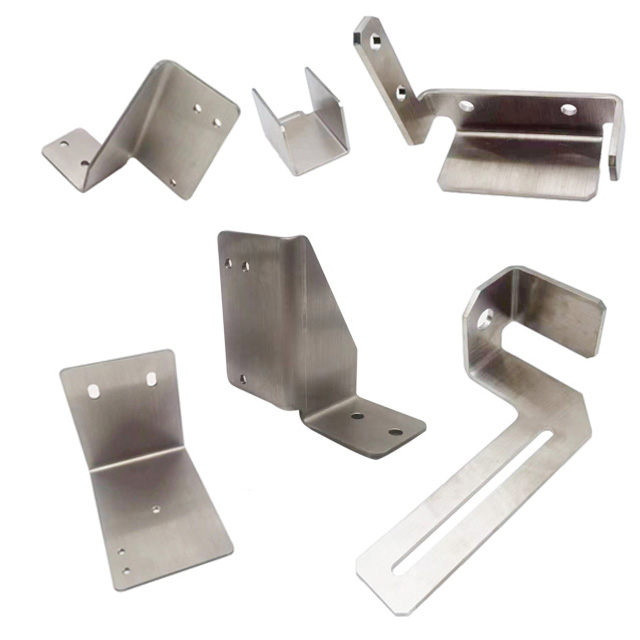
TIG welding, known for its precision and control, is often preferred for welding thin sheet metal as it allows for a clean finish with minimal splatter. MIG welding, on the other hand, is a faster process suitable for thicker sheet metal sections. Spot welding, a resistance welding method, is commonly used for joining sheet metal parts with overlapping surfaces.
Proper preparation is essential before welding sheet metal. This includes cleaning the metal surface to remove any contaminants, selecting the appropriate welding method based on the material thickness, and ensuring proper joint fit-up.
During the welding process, controlling heat input is critical to prevent burn-through or warping of the sheet metal. Utilizing the correct welding technique, maintaining the right welding parameters, and controlling the welding speed are key factors in achieving high-quality welds on sheet metal.


