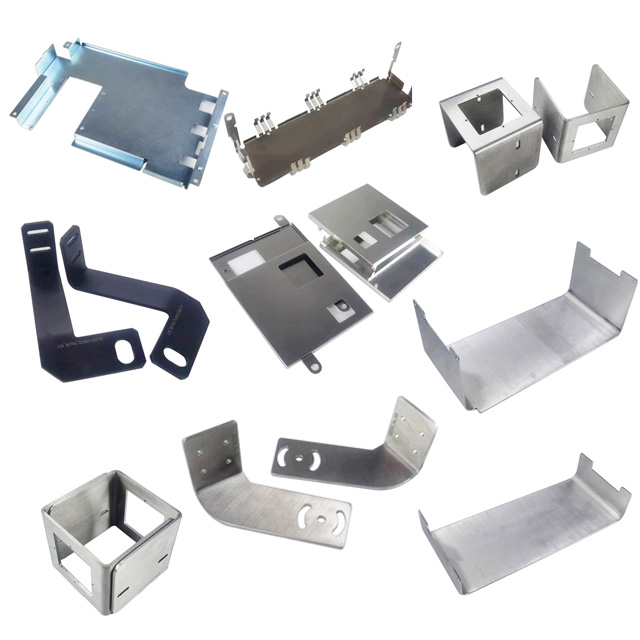
Explore Sheet Metal Fabrication: Slitting, Working, and Welding Processes.
Explore Sheet Metal Fabrication: Slitting, Working, and Welding Processes.
Processing | CNC turning, CNC milling, Drilling, Grinding, Spinning, Wire-EDM Cutting, Stamping, Laser Cutting, Bending, Die Casting,Extrusion, Injection Molding |
Materials | Aluminum: 2000 series, 6000 series, 7075, 5052, etc. |
Stainless steel: SUS303, SUS304, SS316, SS316L, 17-4PH, etc. | |
Steel: 1214L/1215/1045/4140/SCM440/40CrMo, etc. | |
Brass: 260, C360, H59, H60, H62, H63, H65, H68, H70, Bronze, Copper | |
Titanium: Grade F1-F5 | |
Surface Treatment | Anodized, Bead Blasted, Silk Screen, PVD Plating, Zinc/Nickel/Chrome/Titanium Plating, Brushing, Painting, Powder Coated, |
Passivation, Electrophoresis, Electro Polishing, Knurl, Laser/Etch/Engrave etc. | |
Quality Assurance | ISO9001:2015, ISO13485:2016, RoHs, TUV |
Tolerance | +/-0.002~+/-0.005mm |
Understanding Sheet Metal Working:
Sheet metal working encompasses a range of processes used to cut, shape, form, and assemble metal sheets into finished products. From simple bending operations to complex welding procedures, sheet metal working allows manufacturers to fabricate a wide array of products with precision and efficiency.
Key Techniques in Sheet Metal Working:
Cutting: Cutting is the process of removing material from a metal sheet to achieve the desired shape and size. Techniques such as shearing, laser cutting, and water jet cutting are commonly used in sheet metal fabrication.
Bending: Bending involves deforming a metal sheet along a straight axis to create angles, curves, or complex geometries. Press brakes and roll forming machines are often employed for bending operations.
Forming: Forming techniques like stamping, deep drawing, and hydroforming are used to shape metal sheets into three-dimensional components with intricate designs and details.
Joining: Joining methods such as welding, brazing, and soldering are utilized to connect multiple metal sheets or components together to form assemblies or structures.
Tools and Equipment in Sheet Metal Working:
Sheet metal working requires a variety of specialized tools and equipment to carry out different processes effectively. Common tools include shears, press brakes, punches, dies, welding machines, and CNC machining centers, which enable precise and efficient metal fabrication.
Applications of Sheet Metal Working:
The versatility of sheet metal working makes it indispensable in a wide range of industries, including automotive, aerospace, construction, electronics, and furniture manufacturing. Sheet metal components produced through these processes are used in applications such as vehicle bodies, enclosures, cabinets, HVAC systems, and structural frameworks.
Quality Control in Sheet Metal Working:
Ensuring quality control is paramount in sheet metal working to guarantee the integrity, accuracy, and performance of fabricated components. Inspection techniques, material testing, and adherence to industry standards help maintain product quality and reliability.