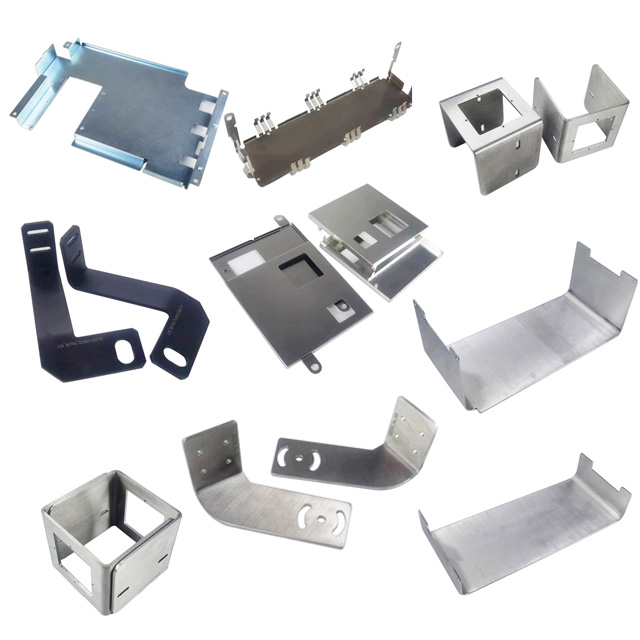
Discover Sheet Metal Fabrication Techniques: Stretch Forming, Stamping, and Spinning Processes.
Discover Sheet Metal Fabrication Techniques: Stretch Forming, Stamping, and Spinning Processes.
Processing | Stamping, Deep drawing, Laser cutting,Bending, Welding, Drilling, Grinding, Spinning,CNC etc |
Materials | Aluminum: 2000 series, 6000 series, 7075, 5052, etc. |
Stainless steel: SUS303, SUS304, SS316, SS316L, 17-4PH, etc. | |
Steel: 1214L/1215/1045/4140/SCM440/40CrMo, etc. | |
Brass: 260, C360, H59, H60, H62, H63, H65, H68, H70, Bronze, Copper | |
Titanium: Grade F1-F5 | |
Surface Treatment | Anodized, Bead Blasted, Silk Screen, PVD Plating, Zinc/Nickel/Chrome/Titanium Plating, Brushing, Painting, Powder Coated, |
Passivation, Electrophoresis, Electro Polishing, Knurl, Laser/Etch/Engrave etc. | |
Quality Assurance | ISO9001:2015, ISO13485:2016, SGS, RoHs, TUV |
Tolerance | +/-0.002~+/-0.005mm |
Understanding the Stamping Process:
Stamping is a cold-forming process that applies pressure to a metal sheet to deform it into a specific shape. The process typically involves a press machine equipped with dies and punches that exert force on the sheet metal, causing it to bend, stretch, or emboss as per the design requirements.
Types of Stamping Techniques:
Blanking: In blanking, a punch and die are used to cut out a predetermined shape from the sheet metal, leaving the desired part as the final product.
Bending: Bending involves deforming the metal sheet along a straight axis to create angular or curved shapes.
Embossing: Embossing is a stamping technique that raises certain areas of the metal sheet to create a three-dimensional design or pattern.
Advantages of Stamping:
- High Precision: Stamping allows for the production of intricate and detailed components with tight tolerances and consistent quality.
- Cost-Effective: Stamping is a cost-efficient manufacturing process as it enables high-speed production of parts with minimal material waste.
- Versatility: Stamping can be used to create a wide range of shapes, sizes, and designs, making it suitable for various applications across industries.
Applications of Stamping in Sheet Metal Fabrication:
Stamping is commonly used in the automotive, aerospace, electronics, and appliance industries for manufacturing components such as brackets, panels, enclosures, and automotive body parts. Its ability to produce parts with complex geometries and high repeatability makes it a preferred choice for mass production of metal components.
Quality Control in Stamping:
Maintaining quality control is essential in the stamping process to ensure the accuracy, consistency, and durability of the produced parts. Inspection techniques such as dimensional checks, material testing, and visual inspections help in verifying the quality of stamped components.