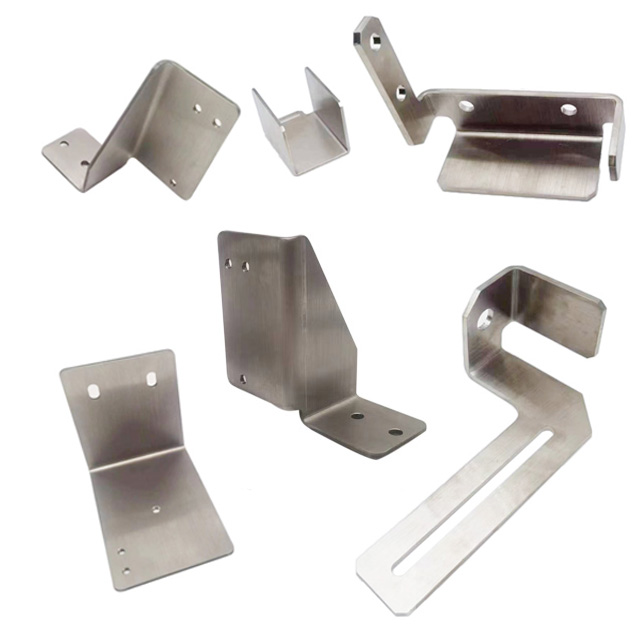
Precision Sheet Metal Bending, Brake Bending and Bent Steel Sheets
SPCC cold-rolled sheet is primarily utilized for electroplating and paint parts due to its affordability and ease of molding, suitable for material thicknesses ≤3.2mm.
SHCC hot-rolled plate, with a material thickness of ≥3.0mm, is also employed for electroplating and paint parts, offering cost-effectiveness but posing challenges in forming, predominantly used for flat components.
Galvanized sheets like SECC and SGCC serve different purposes. SECC electrolytic plates come in N and P variants, with N material focusing on surface treatments and P material tailored for spraying applications, the former being more costly.
Copper is predominantly used with conductive materials and undergoes surface treatments such as nickel plating, chromium plating, or no treatment, characterized by its higher cost.
Aluminum plates are treated with processes like chromate (J11-A), oxidation (conductive or chemical), or high-end finishes like silver plating or nickel plating, reflecting their higher cost.
Aluminum profiles, featuring complex cross-section structures, find widespread application in various enclosures, often treated similarly to aluminum plates.
Stainless steel, commonly utilized without surface treatments, is known for its higher cost implications.
Material | Aluminum, stainless steel, copper, brass, galvinized etc. |
Surface treatment | Powder coating, electroplating, oxide,anodization |
Technics | laser cut, bend, weld, stamp |
Drawing Format | 3D/CAD/Dwg/IGS/STP |
Technics | laser cut, bend, weld, stamp |
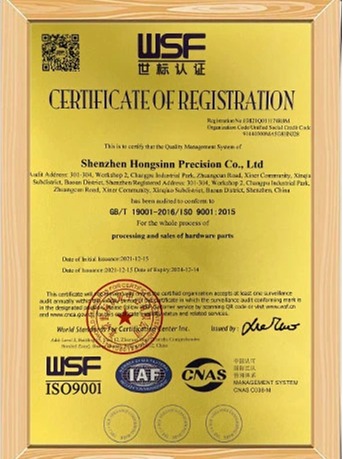
Certification | ISO9001:2015 |
OEM/ODM | Accept |
Drawing Format | 3D/CAD/Dwg/IGS/STEP |
Blank Size | 10’ x 20’ (3.05 m x 6.10 m). We accommodate larger part volumes upon request. |
Sheet Thickness | 0.024” - 0.250” typical. We accommodate thicker or thinner gauges upon request. |
General Tolerances | For single planes or flat parts, +/- 0.005” on edge to edge, edge to hole, and hole to hole features; +/- 0.010” on bend to edge/hole features. For multi-planed bent parts, +/- 0.030” for hole to hole/edge, edge to edge, and over-formed parts; +/- 1 degree for bend angles. |
Braking (Hydraulic) | 10’ length, fingers from 3” - 6” |
Braking (Magnetic) | 6 tons of magnetic pull across the entire beam, 5/8″ minimum reverse bend |
Punching | 2″ diameter hole capacity, or larger upon request |
Welding | Welded edges and seams, weldments, and assemblies |
Application | Appliance, Auto, Building, Capital equipment, Energy, Instrumentation, Medical device, Telecommunications |
Experience precision sheet metal bending, expert bending using sheet metal brake techniques, and the craftsmanship of bent steel sheet fabrication.


Electroplating involves the attachment of charged ions to the product's surface within an electroplating solution, forming a coating under the influence of an electric field.
Powder spraying polarizes the powder, causing it to evenly adhere to the product's surface of the opposite polarity due to the force of the electric field.
Electrophoretic coating sees charged coating ions moving to the product's surface and depositing to create a coating under the influence of positive and negative poles.
Dipping entails heating the product in molten material, allowing the metal to combine with the surrounding molten material, forming a surface layer of a specific thickness.