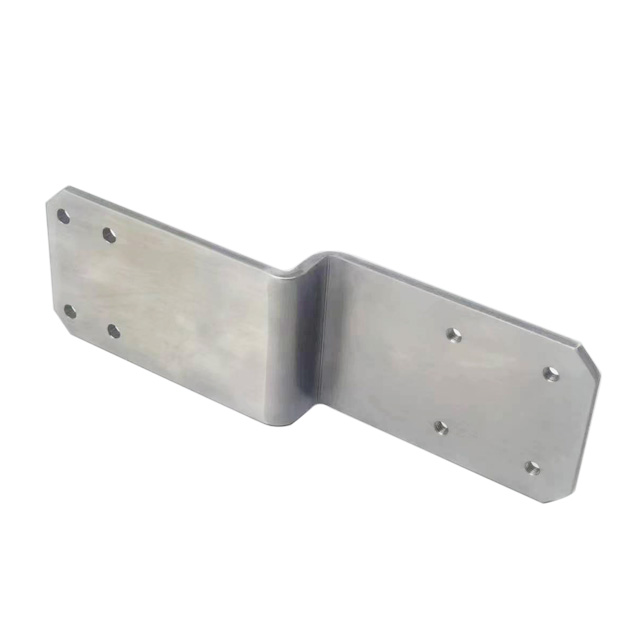
Explore seaming, roll forming, and riveting processes in sheet metal fabrication for comprehensive manufacturing insights.
Explore seaming, roll forming, and riveting processes in sheet metal fabrication for comprehensive manufacturing insights.
In the realm of sheet metal fabrication, the seaming process plays a crucial role in joining and finishing metal components with precision and durability. Understanding the nuances of the seaming process is essential for achieving high-quality results in various manufacturing applications.
Model Name | Sheet Metal Parts |
Available Material | Metal Parts: aluminum,steel,stainless steel,brass,copper,iron, etc. Plastic Parts: PC, PP, ABS, PMMA, PA, POM, PC+ABS, rubber, etc. |
Surface Treatment | Anodizing different colors, brush, sandblast, painting, powder coating, galvanization, nickel/tin/chrome/copper plating, etc. |
Additional Capabilities | CAD Design Services,CAM Programming Services Coordinate Measuring Machines (CMM),Reverse Engineering |
Industry Focus | Appliance/ Automotive/ Agricultural/ Electronics/ Industrial/ Marine/ Mining/ Hydraulics/ Valves/ Oil and Gas/ Electrical/ Construction/ Machinery/ Furniture/ Toy/ Wood board/ Wall/ Agricultural |
Artwork Format | 2D format: PDF. 3D format: stp, step, igs. |
Trade Term | EXW, FOB Shenzhen, CIF, CFR, DDU, DDP |
Payment Term | T/T, L/C, Alipay |
Sample and Cost | Free charge in our stock, customized sample according to the drawing. |
Lead Time of Sample | Within 1 week |
Techniques of the Seaming Process
Overlap Seaming: Overlap seaming involves overlapping two metal sheets and mechanically joining them together using techniques such as clinching or welding. This method creates a strong, leak-resistant joint commonly used in the production of ductwork, containers, and other sheet metal assemblies.
Lock Seaming: Lock seaming, also known as Pittsburgh seam, involves folding the edges of two metal sheets together to interlock and create a tight joint. This technique provides excellent strength and is often used in the fabrication of HVAC ducts, roofing systems, and automotive components.
Button Punching: Button punching is a seaming technique where small holes are punched along the edges of metal sheets to create a series of interlocking buttons. These buttons are then folded over to form a secure joint, commonly used in the assembly of metal panels and enclosures.
Applications of the Seaming Process
The seaming process finds wide-ranging applications in industries such as construction, automotive, aerospace, and HVAC. It is used to fabricate a variety of products, including air ducts, metal containers, roofing systems, and structural components that require strong and leak-resistant joints.
Advantages of the Seaming Process
- Strength and Durability: Seamed joints are known for their strength and durability, providing long-lasting performance in various applications.
- Leak Resistance: Properly executed seams create tight joints that are resistant to leaks, making them ideal for applications where sealing is critical.
- Cost-Effective: Seaming processes are often cost-effective compared to other joining methods, offering efficient and reliable solutions for sheet metal fabrication.